Design of New Words
Drawing as the Language of Representation
- Design of New Words
- Drawing as the Language of Representation
- Notes from a Future Past
- The Relationship with New Technologies
- Artificial Intelligence as a New Language of Representation
- Drawing as a Cognitive and Critical Device
- The Persistence of the Ideal Representation
Drawing as the Language of Representation
The figure that represents existing or imaginary objects
through signs and colors is commonly defined as a drawing. Such a definition, however, requires critical reconsideration in light of the reflections developed in the preceding chapters.
From this perspective, the definition proposed by Leonardo Benevolo is particularly significant: Drawing is the means by which we come to know and modify the whole set of material objects - people, furniture, houses, streets, cities, and territories - among which we live and which constitute the natural and artificial setting of our lives.
This definition highlights the operational function of drawing as an instrument for understanding and transforming the material world. It can usefully be complemented by the lexical reflection proposed by Niccolò Tommaseo in his Dictionary of Synonyms of the Italian Language. Under the entry Abbozzare ("to sketch"), the term disegnare ("to draw") is associated with the concepts of delineare ("to delineate") and adombrare ("to outline" or "to suggest"), while being distinguished from them by a greater degree of determination and clarity. To draw means to make explicit a structure of relationships, to define precisely the components of a thought, and to prepare the means necessary for achieving a purpose.
This interpretation acquires particular significance when drawing is understood not merely as the graphic representation of an object, but as the intentional organization of ideas. In this sense, drawing becomes a process through which thought takes form, relationships are established, and possibilities are made visible. It is therefore not simply an act of depiction, but a cognitive and projective activity that allows reality to be analyzed, interpreted, and transformed.
Drawing can thus be regarded as a true language of representation: a system of signs governed by conventions and rules, capable of communicating knowledge, intentions, and visions of the world. Through this language, ideas are translated into visible forms, making possible the transmission of information and the construction of shared meanings. For this reason, drawing occupies a central role in architecture, art, design, and all disciplines concerned with conceiving and shaping human environments.
Under the entry Meaning, Sense, Tommaseo observes that drawing means representing an object through appropriate signs, outlining its contours and defining its conceptual boundaries. Drawing therefore emerges as a process of progressive determination, in which the object is made intelligible through an ordered succession of signs.
Even more significant is the definition found under Purpose, Design, Project, Designer, in which drawing is understood as a “series of conceived ideas” directed toward a specific end. In this sense, the term does not merely identify a graphic artifact, but rather a conceptual device that organizes means and ends within a coherent structure. Drawing thus acquires a strategic and projective dimension, distinguishing itself from the simple project through the greater completeness and nobility of its purpose.
In light of these considerations, it is possible to identify two different ways through which the process of translating an idea into concrete form takes place, that is, the passage from idea to reality.
The first mode, which represents the most common case, can be described through the sequence:
Vision → Representation → Realization
Vision encompasses both the perception of reality and the elaboration of the imaginary. Representation constitutes the intermediate moment in which the idea assumes a communicable form through one or more expressive languages. Realization, finally, coincides with the concretization of the idea, either in the physical world or in the mental completion of the conceived work.
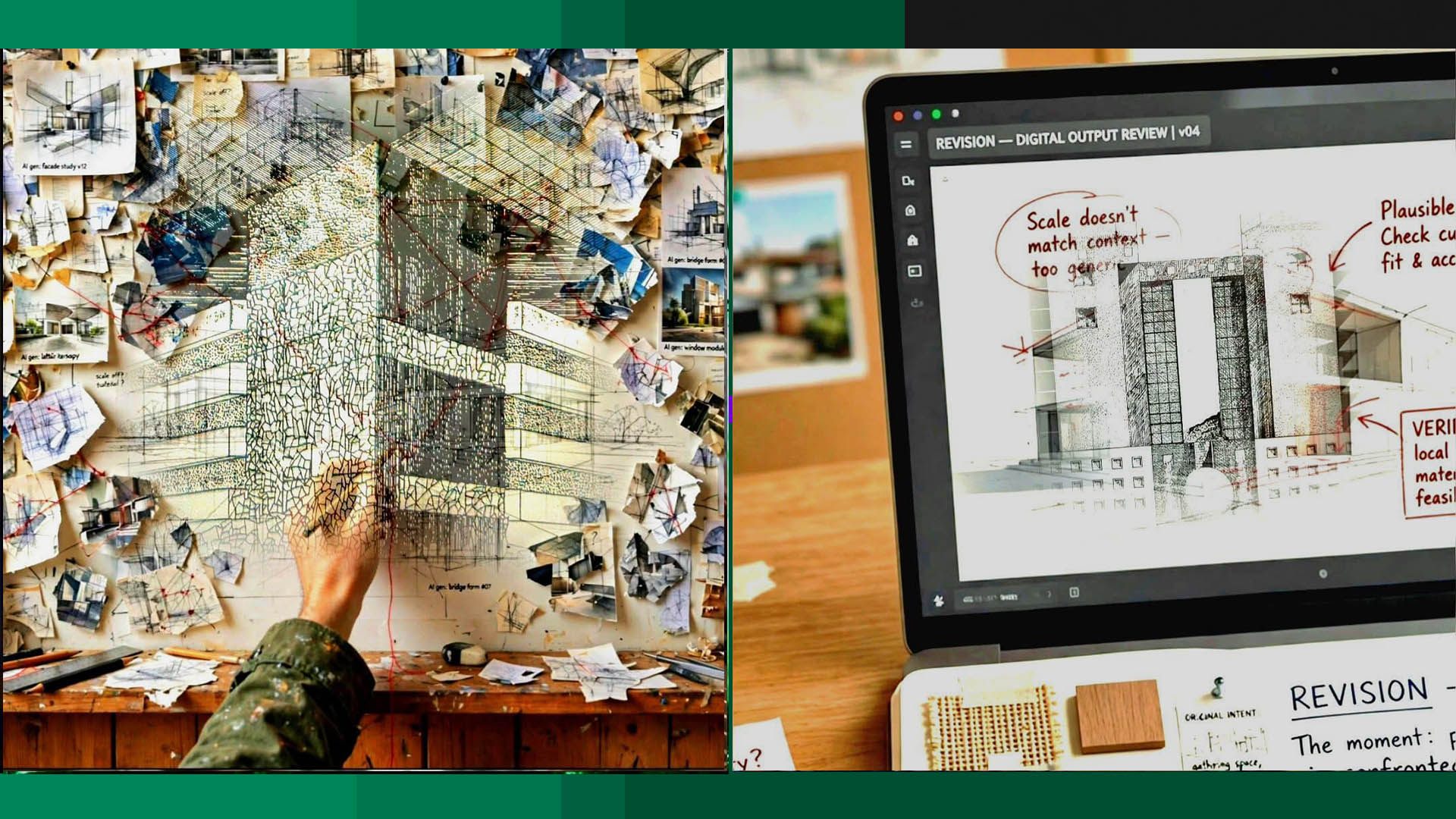
This process does not end with realization itself. The completed work in fact generates a new perceptual phase, definable as Revision, through which the subject returns to observe reality enriched by the experience of the realization just accomplished. Revision fosters new associations, new interpretations and, consequently, new visions. The process therefore assumes a circular and dynamic configuration.
The second mode, less frequent but no less significant, is characterized by the absence of the intermediate stage of representation and can be schematized as follows:
Vision → Realization
In this case, representation is not entrusted to an external and shared language, but remains within an inner dimension, taking the form of an ideal representation, one that is not made explicit through signs, images, or other expressive systems.
It is appropriate, however, to focus attention on the concept of the language of representation, understood as the set of means through which an idea becomes communicable. Within this domain belong Drawing, Gesture, Music, and all other symbolic forms capable of transforming thought into expression.
In this perspective, drawing can be defined as:
The language of representation that mediates between vision and realization.
It occupies a central position within the creative process, as it makes it possible to translate the perception of the real and the imagined into a form endowed with structure and communicability. The represented object does not coincide solely with the real object, nor solely with the imagined one; rather, it emerges from the interaction of perception, memory, association, and interpretation.
Drawing is the first physical form of matter when considered in its condition of real representation; yet, at the same time, drawing is also a form of thought when viewed from the perspective of the imaginary. Thought, in fact, takes shape through the image of an object or a movement, associating an idea with its corresponding graphic image. The drawing of thought is then translated into concrete drawing through the means available to the operator, who selects the language most appropriate to the requirements of representation.
Thought is represented simultaneously by means of an image; in this case, the quality of the drawing will be equivalent to that of a real photograph in the case of static objects. In other cases, it will correspond to the equivalent of a film of an action: a sequence of frames flowing at a given speed so as to compose the imagined action.
Represented drawing, composed of lines, points, fields of color, and shadows, is the two-dimensional restitution of physical or imaginary reality.
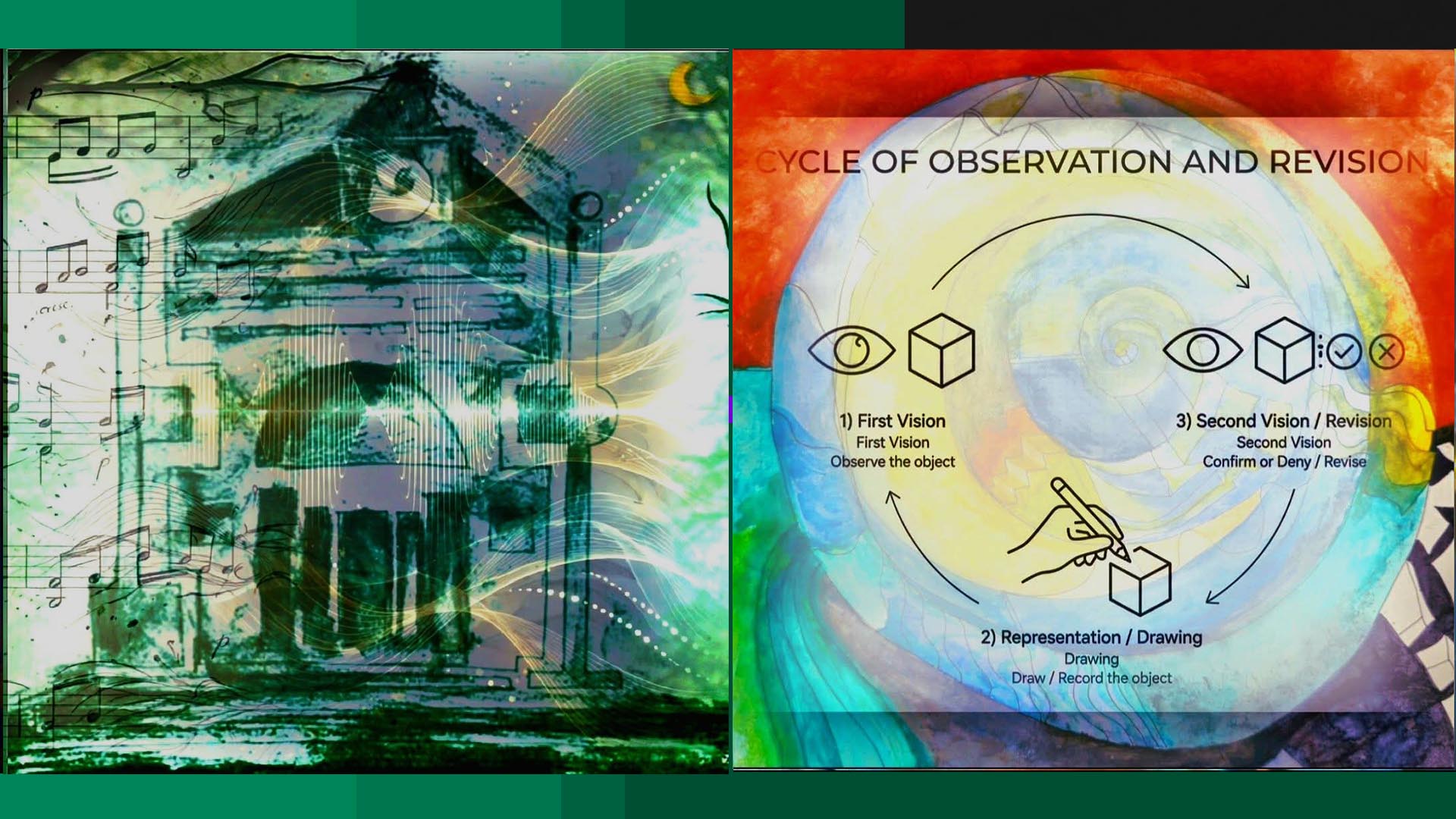
Drawing is also the translation of a language of “felt things,” as in the case of music. The drawing of a symphony’s score is not only a sign but also a language of correspondences between sound and sign. Through it, the reproduction of sound and its rhythmic sequence becomes possible.
Drawing is also the description of an event, in which an emblematic action is immortalized on paper, canvas, or stone, with the purpose of preserving the memory of what has occurred or of prefiguring it.
Through representation, which relies on the properties of drawing in order to exist as such, one returns to drawing itself in the process of revision that precedes a second viewing of the object under examination. The first vision of things returns after their realization, in order to confirm or deny the translation of the idea into reality.
Through revision, a second vision of the object is thus established, enriched by the experience of its realization.
From "Design of New Words"
Drawing as the Language of Representation by Filippo Lo Presti 1989
Notes from a Future Past
The Relationship with New Technologies
Read in the light of contemporary technologies, this 1989 text may appear strikingly relevant. New technologies do not replace drawing; rather, they redefine its role and field of action. The greater the power of generation and visualization tools, the more evident becomes the need for a critical principle capable of directing their outcomes.
Drawing therefore continues to fulfill its fundamental function as a mediator between conception and realization, between imagination and construction, between vision and cultural responsibility. No longer merely a technique of representation, it becomes a cognitive structure and an intentional language through which the project acquires coherence, meaning, and the possibility of existence.
In the text, drawing is defined not as a mere technique of depiction, but as a language of representation that mediates between vision, understood as both perception and imagination, and the realization of the work. The design process is described as a dynamic cycle:
Vision → Representation → Realization → Revision
within which the completed work generates new perceptions and new interpretive possibilities, thereby reactivating the process itself. The text also distinguishes between two operational modes: a more common one, in which representation is externalized through signs, models, and images; and a second mode, in which representation remains ideal and internalized, without being translated into external forms. From this perspective, drawing does not coincide with the graphic product itself; rather, it functions as a conceptual device capable of organizing thought, defining relationships, and anticipating realization.
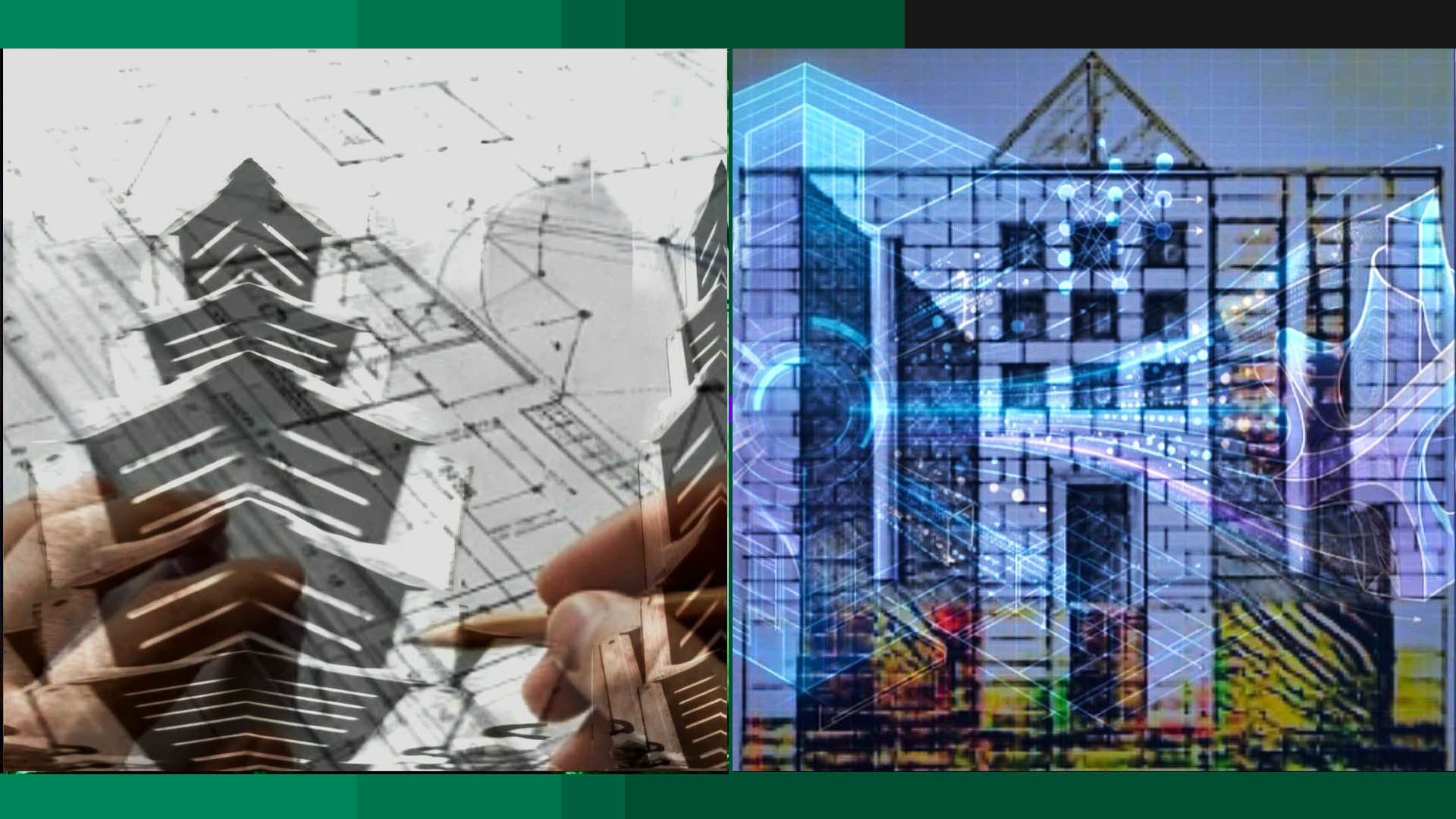
Contemporary digital technologies, ranging from generative artificial intelligence to CAD systems, do not contradict this theoretical framework. Rather, they redefine its operational modalities, confirming the processual nature of drawing as the progressive determination of form.
Artificial Intelligence as a New Language of Representation
Current generative artificial intelligence image generators make it possible to separate visualization from explicit geometric construction, enabling extremely rapid image production and exploration. They significantly expand the representational phase, multiplying figurative possibilities and accelerating the iterative cycle between imagination and verification.
Their probabilistic nature, however, raises a crucial issue: the ability to produce highly persuasive images at the perceptual level does not necessarily coincide with the structural, spatial, or constructive coherence of the proposal. The distinction between representation and deep understanding of the project thus re-emerges. Artificial intelligence excels as an exploratory and communicative tool, but it does not replace the critical judgment required for the construction of meaning, relationships, and coherent forms.
Drawing as a Cognitive and Critical Device
Within this new technological ecosystem, drawing does not disappear; rather, its function changes. From a predominantly productive practice, it increasingly becomes a cognitive device for orientation, verification, and control.
The designer is no longer merely the author of the sign, but the one responsible for the conceptual conditions that guide the generation of images and determine their meaning. The phase of Revision, already identified in my theoretical model of 1989, therefore assumes a central role: it is the moment in which the plausibility of the digital output is confronted with the design intention, the internal coherence of the system, and the cultural responsibilities implied in the act of designing.
The Persistence of the Ideal Representation
The second mode described in the text, in which the process moves directly from vision to realization without an explicitly formalized intermediate graphic representation, also finds new technological configurations today.
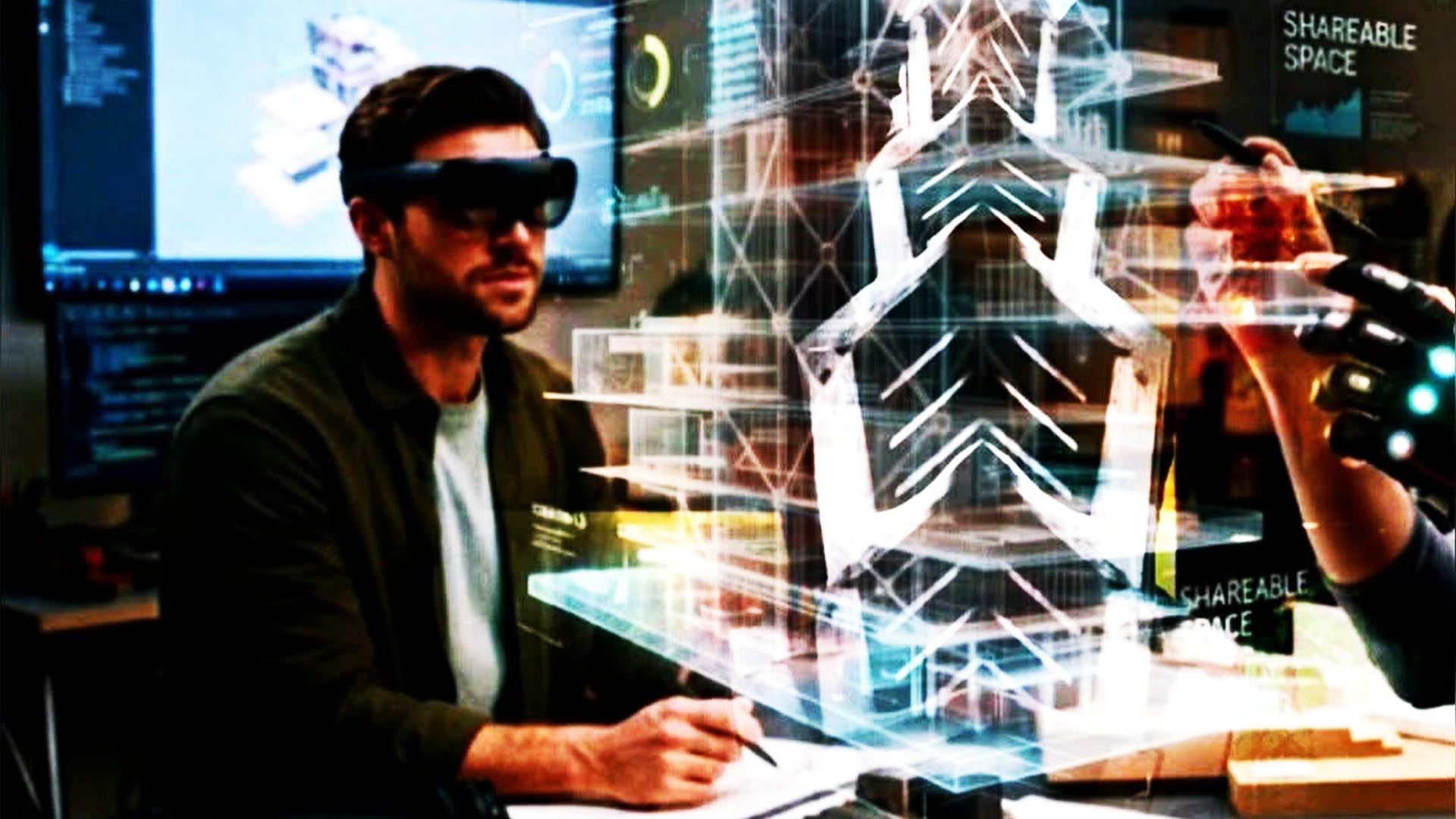
Immersive virtual and augmented reality environments make it possible to intervene directly within simulated space, transforming what once belonged solely to the mental sphere into a shareable experience. In this sense, ideal representation is not superseded, but rather made operational through new devices of externalization.
The translation of internalized images into perceptible and verifiable forms continues to constitute the cognitive core of the design process. Contemporary technologies amplify this process, extending its capacities for simulation, control, and real-time verification.
Notes from a Future Past
Filippo Lo Presti, 2026