City's Stage
- Barcelona, Spain
- Sagrada Familia
- Park Güell
- Palau Güell
- Mies van der Rohe Pavillon
- Museu Picasso
- Rome, Italy
- Sant'Agnese in Agone
- Parco Archeologico Colosseo
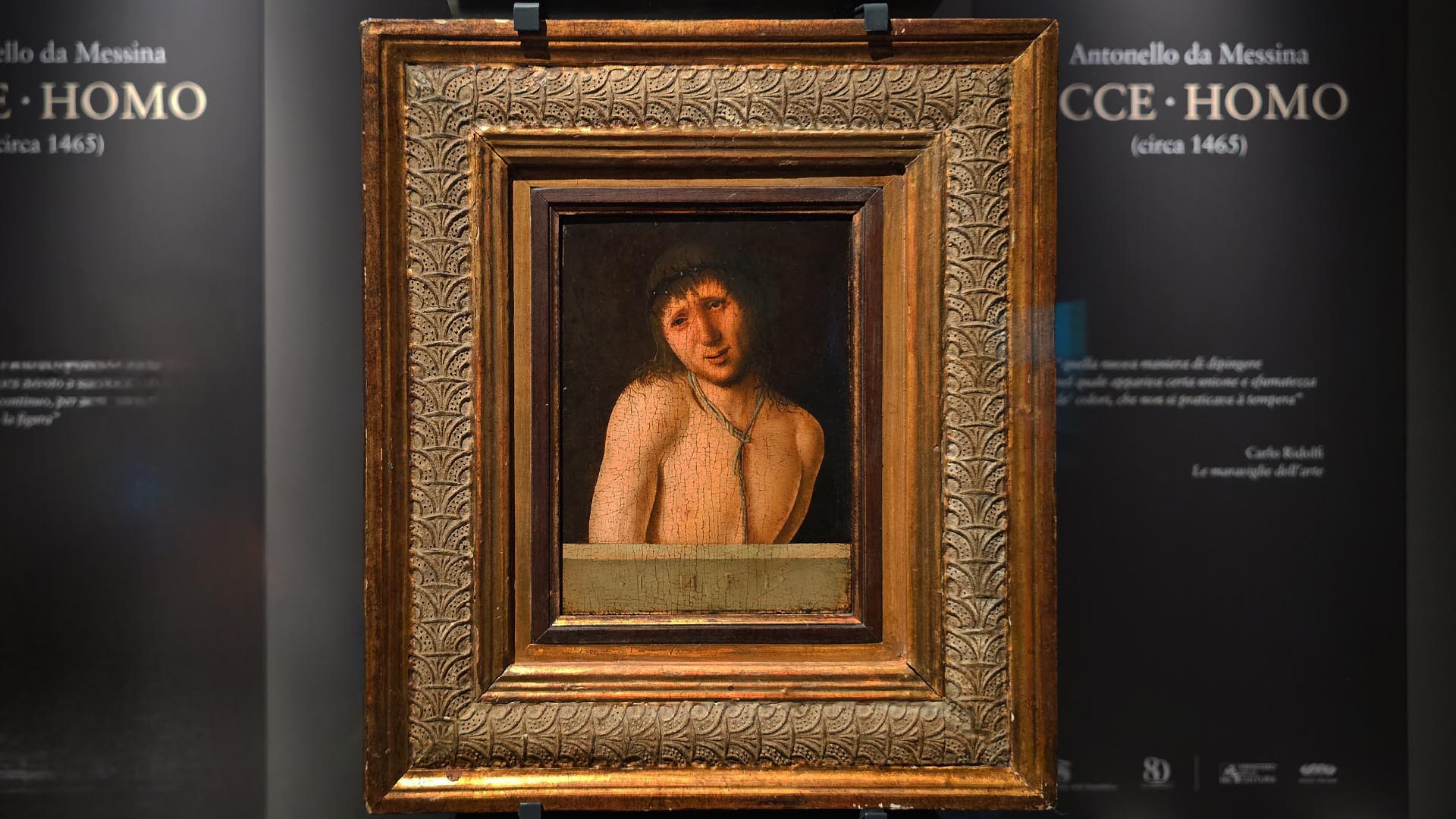
- Ecce Homo — Antonello da Messina
- Saint Peter’s and Bernini’s piazza
- Via dei Fori Imperiali
- Chiostro di Michelangelo
- Via della Conciliazione
- Castel Sant’Angelo
- Galleria Sciarra
- Colosseo/Fori Imperiali station
- Cloister of the Minerva
- Piazza San Giovanni in Laterano
The city becomes a stage without curtains
where bodies, machines, and architectures perform an endless, involuntary choreography. Every street is a scene; every passerby an actor unaware of their role; every mechanical rhythm a metronome of collective movement.
where bodies, machines, and architectures perform an endless, involuntary choreography. Every street is a scene; every passerby an actor unaware of their role; every mechanical rhythm a metronome of collective movement.
Barcelona, Spain
Sagrada Familia
The camera enters through the doors. The shot continues in one flowing movement, no cuts, no breaks. Light pours through stained glass, painting the columns in shifting blues, greens, reds, and golds.
A brief, luminous passage through the Sagrada Família, filmed in 2026. Gaudí’s organic spires rise like a living forest of stone, while the camera moves in a slow, ritual ascent through light, color, and branching geometry. The soundtrack Time Machine (Ionone Music) folds the images into a temporal pulse, architecture becomes breath, light becomes motion, Barcelona becomes a resonant time‑organism.
Park Güell
A brief ritual of color, stone, and equilibrium
Park Güell is the other face of Gaudí’s cosmos: not ascent, but wandering. A constructed landscape dissolving the boundaries between natural and artificial, between intention and environment. Lo Presti traverses it as one walks through a mythic garden, where every curve is a gesture, every mosaic a fragment of sedimented time. His lens reveals the park as a living dialogue, a place where form emerges from the encounter between human will and terrestrial breath.
Palau Güell
The Inner Universe
In the heart of El Raval, Palau Güell is a gathered cosmos, a private theatre where Gaudí experiments with languages that will become future. Lo Presti reveals its introverted nature: parabolic arches like orbits, organic ironwork like constellations, spaces holding industrial ambitions and celestial visions. The film is a journey into the Gaudinian microcosm, a universe that closes in order to open, that contracts in order to expand.
Mies van der Rohe Pavillon
Short Film and Original Music
This short film produced in 2026, presents a contemporary reading of Mies van der Rohe’s Barcelona Pavilion. Through an interplay of cinematography and the original music "Revelation", the work examines the pavilion’s spatial composition, its chromatic surfaces, and its role as a foundational gesture of modern architecture. The film invites viewers to experience the pavilion not only as a historical icon, but as a living field of perception.
Museu Picasso
and Time Machine
A museum is a temporal organism, a chamber where memory condenses into light and light unfolds into form. This film — composed entirely through photographic images, expanded and animated enters the Museu Picasso as one enters a living constellation. The five medieval palaces of Carrer de Montcada become ribs of a single breathing structure: stone remembering, shadow listening, color awakening. Here, Picasso is not yet the master of modernity. He is a young force, a gaze in formation, a spark preparing to fracture the world of images. Through photographic stillness, each frame becomes a vessel of duration — a moment that stretches, inhales, reveals the embryonic grammar of an artist who will soon bend time itself. The soundtrack — Time Machine, in a new Ionone variation — is the film’s temporal engine. Its pulses fold the images; its harmonics open the rooms; its drones resonate with the stone. Music becomes architecture. Architecture becomes duration. This is a documentary and a ritual of seeing, a slow crossing of a museum that is also a constellation — a place where the past vibrates, where form mutates, where the gaze learns to become future. Welcome to the Museu Picasso. Welcome inside the Time Machine.
Rome, Italy
Sant'Agnese in Agone
A boundless flow, where cinema, architecture, and music become a single living organism.
Welcome to Rome, in the beating heart of Piazza Navona. I am the author of this short film and of the musical piece that runs through it, and today I am guiding you inside Sant’Agnese in Agone not as visitors, but as breathers of space.
I wanted the footage to be a single, uninterrupted long take, one continuous line of life without cuts or breaks. No stasis, no pause, because the architecture of this church does not tolerate fragmentation: it is a continuous flow, a material that streams, curves, and expands. The camera becomes a diaphragm, a lung that follows the undulating lines of the sacred, as if the spectator were crossing a liquid threshold, a boundary that dissolves as you pass through it.
The architects who generated this Baroque organism were Girolamo Rainaldi and his son Carlo. But it was Francesco Borromini, from 1653 onward, who instilled the vibration you perceive: the curvature that reaches out toward the square, the bell towers that soar like vectors of light, the drum that supports the dome like a compressed cosmic sphere. Borromini breathes. His architecture is a theater of shadows and resonances, where columns seem to move, and space contracts and expands like a living organism. It is this dynamic continuity that I sought to convey: a single, long visual embrace, a traversal without return.
To accompany this journey, I adapted a variation of my piece "When" (Ionone Music). The music is not a backdrop: it is the sonic counterpoint of the marble. The harmonic progressions follow the ascent toward the dome, frescoed by Ciro Ferri, while the rhythmic variations evoke the dialogue between Borromini’s curves and the load-bearing structures of the Rainaldis. It is a system of forces: stone rising, sound enveloping, light opening up.
In this short film, cinema, architecture, and music become a single breathing entity. Every note is a pillar, every camera movement is a fresco revealing itself, every shadow is a modulation of time. Let yourself be carried away by this meditative gaze: Sant’Agnese in Agone is meant to be crossed, without ever stopping, in one single, eternal movement.
Parco Archeologico Colosseo
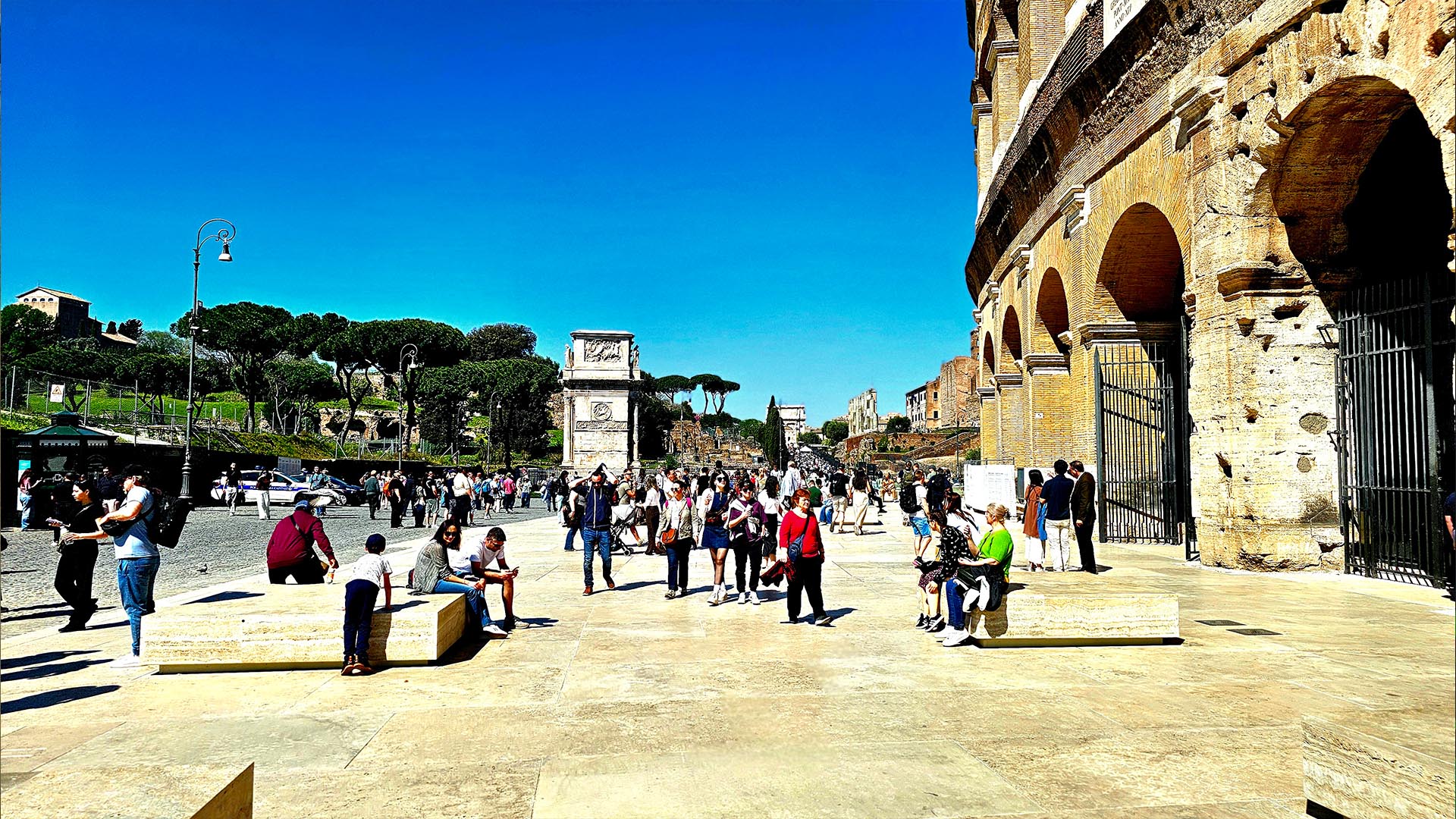
The operation restores the ground to its original elevation through travertine slabs from the Tivoli quarries, the same stone to which the ancient Romans entrusted the idea of duration. Upon this refounded plane, evocative pillars emerge: raised blocks that project the shadow of the ancient supports, presences held within the mineral memory of the site.
The intervention at Parco Archeologico Colosseo remains entirely reversible: each addition can dissolve without wounding the existing fabric, thanks to mortars compatible with ancient materials, conceived to converse with what precedes rather than overpower it. The urban scene shifts, flows, reconfigures itself; yet the deeper sense of things endures, unchanged, like a vibration crossing time and exceeding the boundaries of theoretical debate, allowing what persists beyond form to surface.
Ecce Homo — Antonello da Messina
Rome, Palazzo della Minerva – Sala Capitolare
Library of the Senate of the Republic
Piazza della Minerva 38
A small panel, double like a held breath — 20.3 × 14.9 cm of wood carrying two faces of the world: on the recto, the Ecce Homo; on the verso, Saint Jerome in Penitence, as though the same grain held wound and withdrawal, exposure and ascent.
Re‑emerging after centuries of private silence, this image now offers itself for the first time to the collective gaze: a minute yet absolute apparition, a fragment crossing time to return to the light of the State that has called it back.
In the Sala Capitolare, among stone, shadow, and memory, the panel rests as an object‑threshold: not only a work, but a return, not only a vision, but a rite of restitution.
Saint Peter’s and Bernini’s piazza
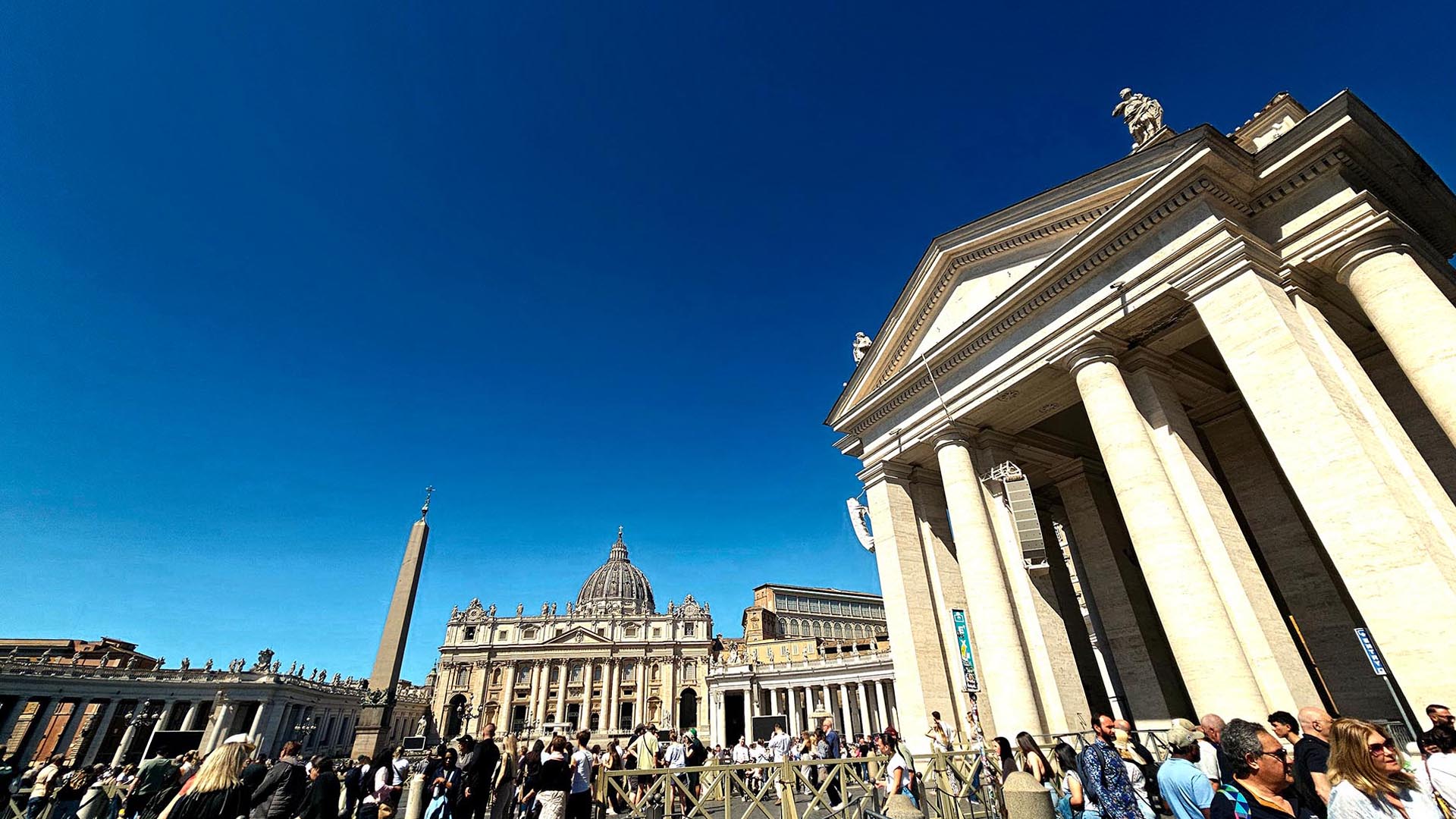
an embrace carved in light.
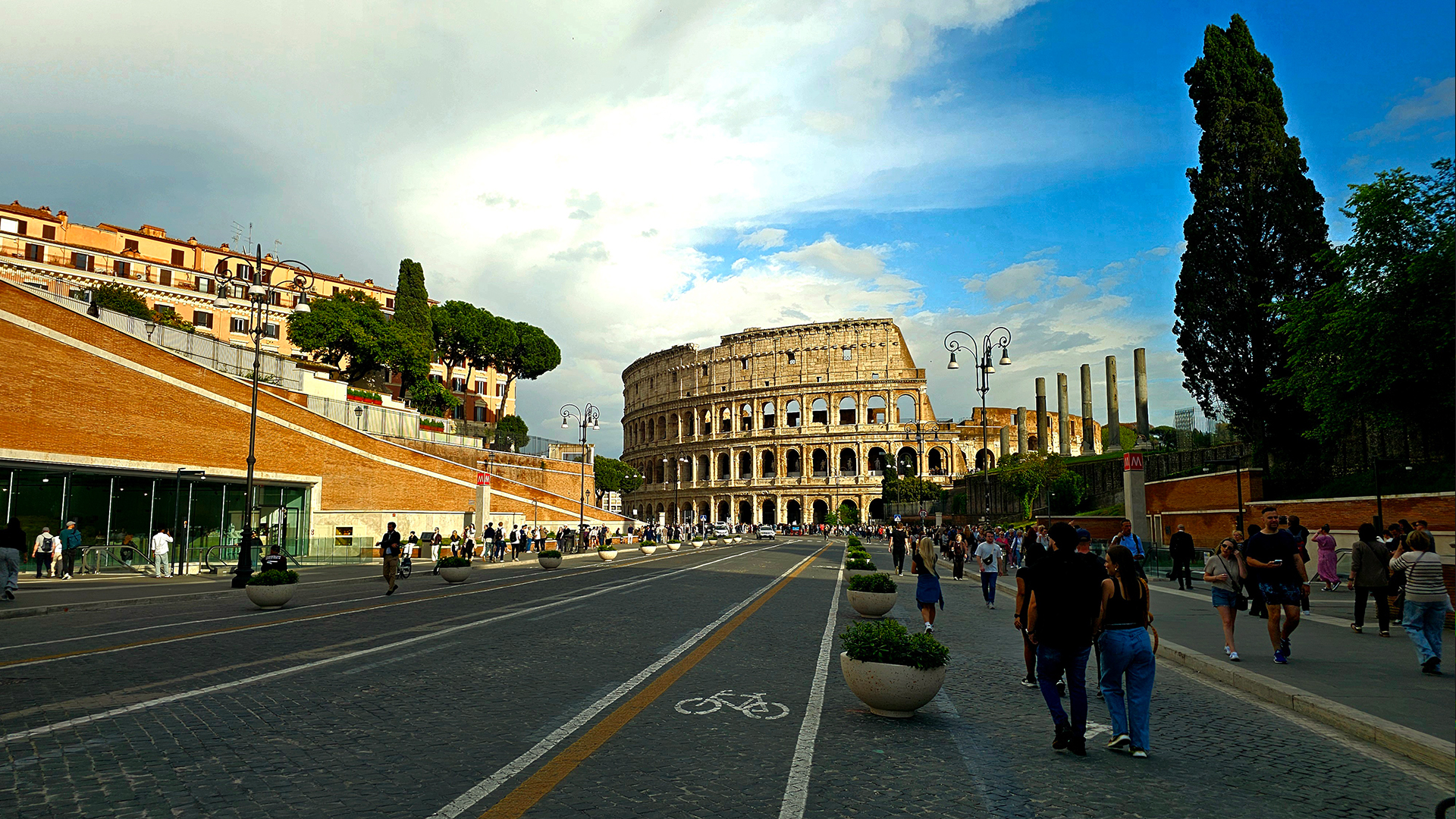
Via dei Fori Imperiali
cuts like a blade toward the Colosseum: an axis that crosses the centuries, born from the demolition of the medieval fabric to unveil the stage of imperial Romanity, where the modern city walks above ancient Rome and time opens in visible layers.
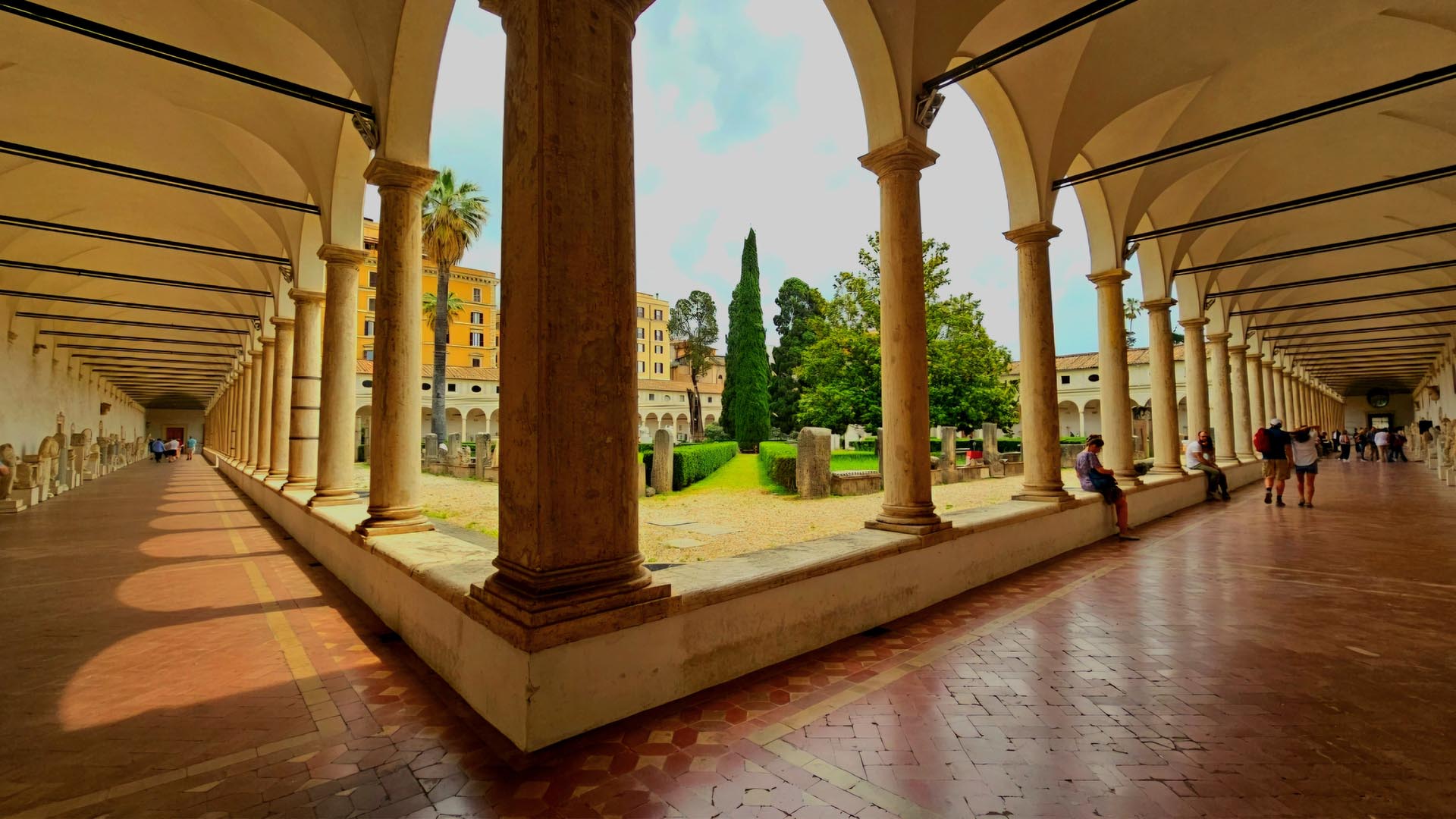
Chiostro di Michelangelo
Here, stone becomes an hourglass, and architecture turns into time, where Michelangelo once traced the perimeter of silence: one hundred monolithic columns supporting its breath. The Chiostro di Michelangelo is a void that measures the order of the cosmos, a sacred geometry of thought. Today, those who walk this portico tread not only on stone, but cross seventeen centuries of history in a single, fleeting sequence of steps.
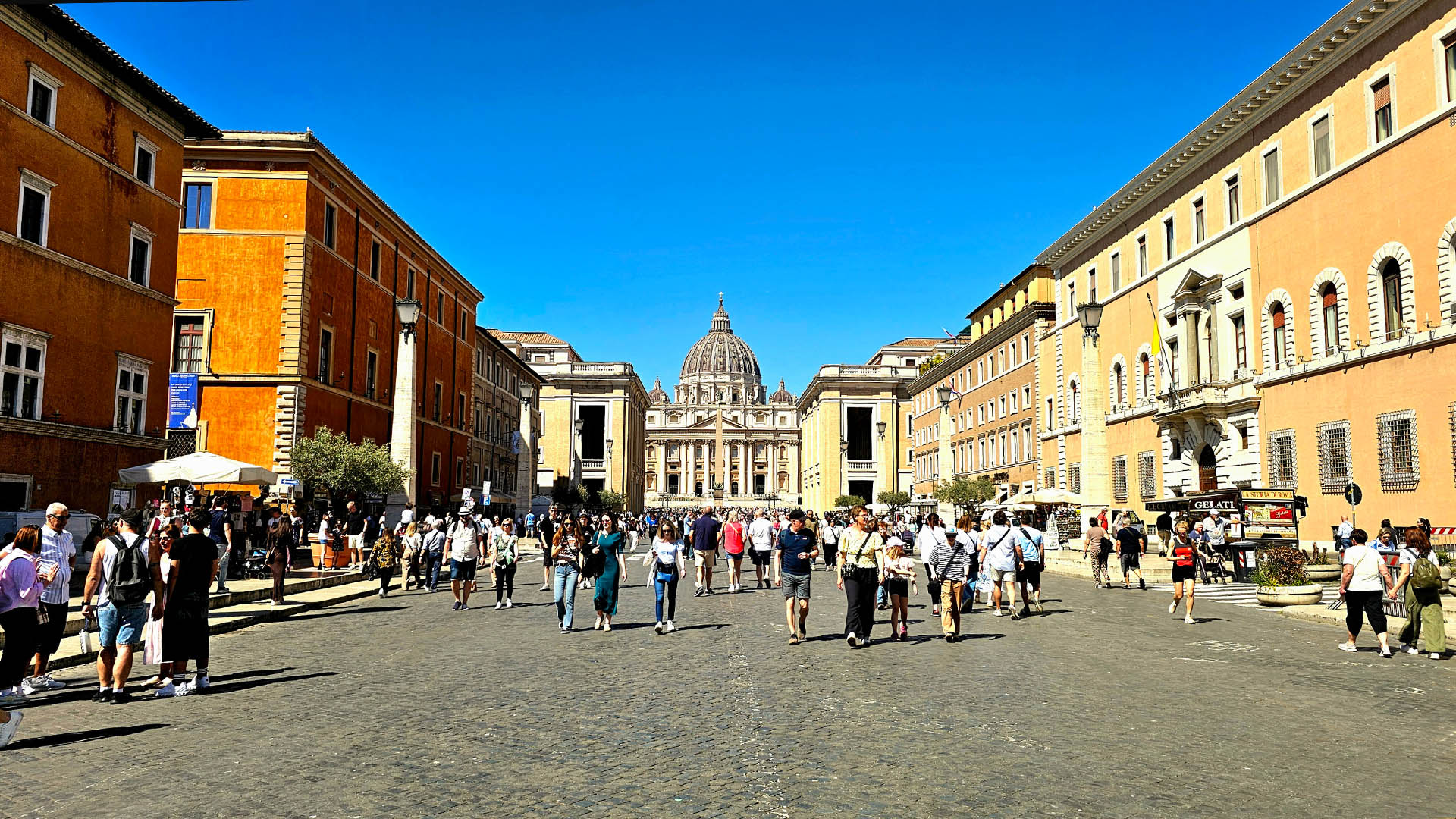
Via della Conciliazione
Where Bernini once built the theatre of revelation, the winding path that prepared the gaze for the surprise of the square opening like an sudden breath, now a rigid axis extends. Via della Conciliazione is born from a wound: the demolition imposed by Mussolini, which erased alleys, houses, memories. Today the street is an axis of power, a forced vision that replaces surprise; thus it becomes a threshold that questions what can no longer be seen, and reminds us that every monument is born also from the shadow of what has been destroyed.
Castel Sant’Angelo
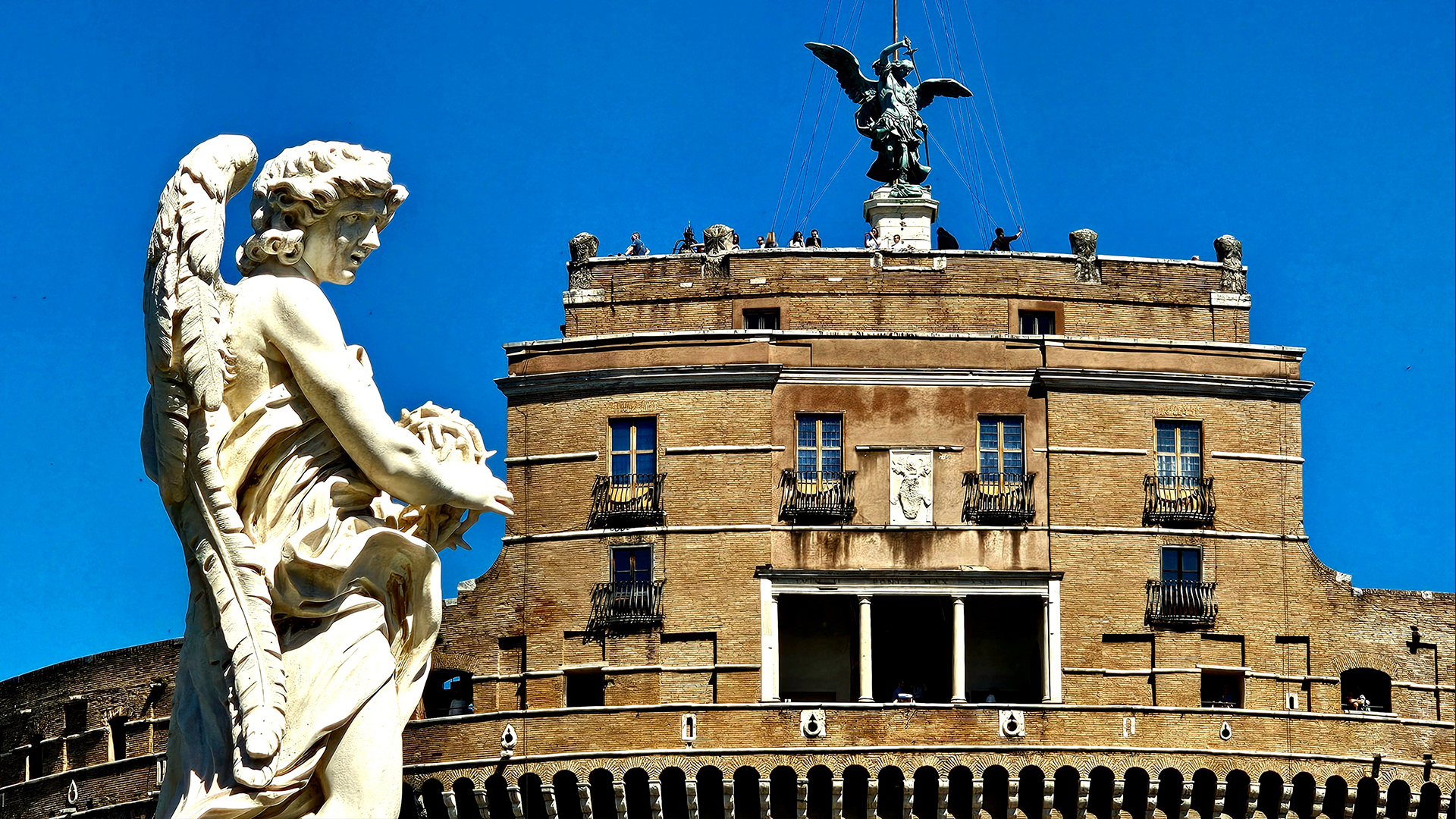
Born as a circular tomb to guard an emperor’s ashes, it becomes a fortress, then a papal shield, then a machine of survival linked to the Vatican by a secret canal pulsing like an underground artery. In the Renaissance, it clothes itself in frescoes. In ages of imprisonment, it closes its walls, holds back whispers, suspends fates. In the twentieth century, it opens again as a museum. Castel Sant’Angelo is a circle that never ceases to change, a rite that repeats itself while shifting form. It is proof that architecture, given enough time, becomes a living being: a bridge between worlds, a breathing seal, a mystical engine that still transforms those who look upon it.
Galleria Sciarra
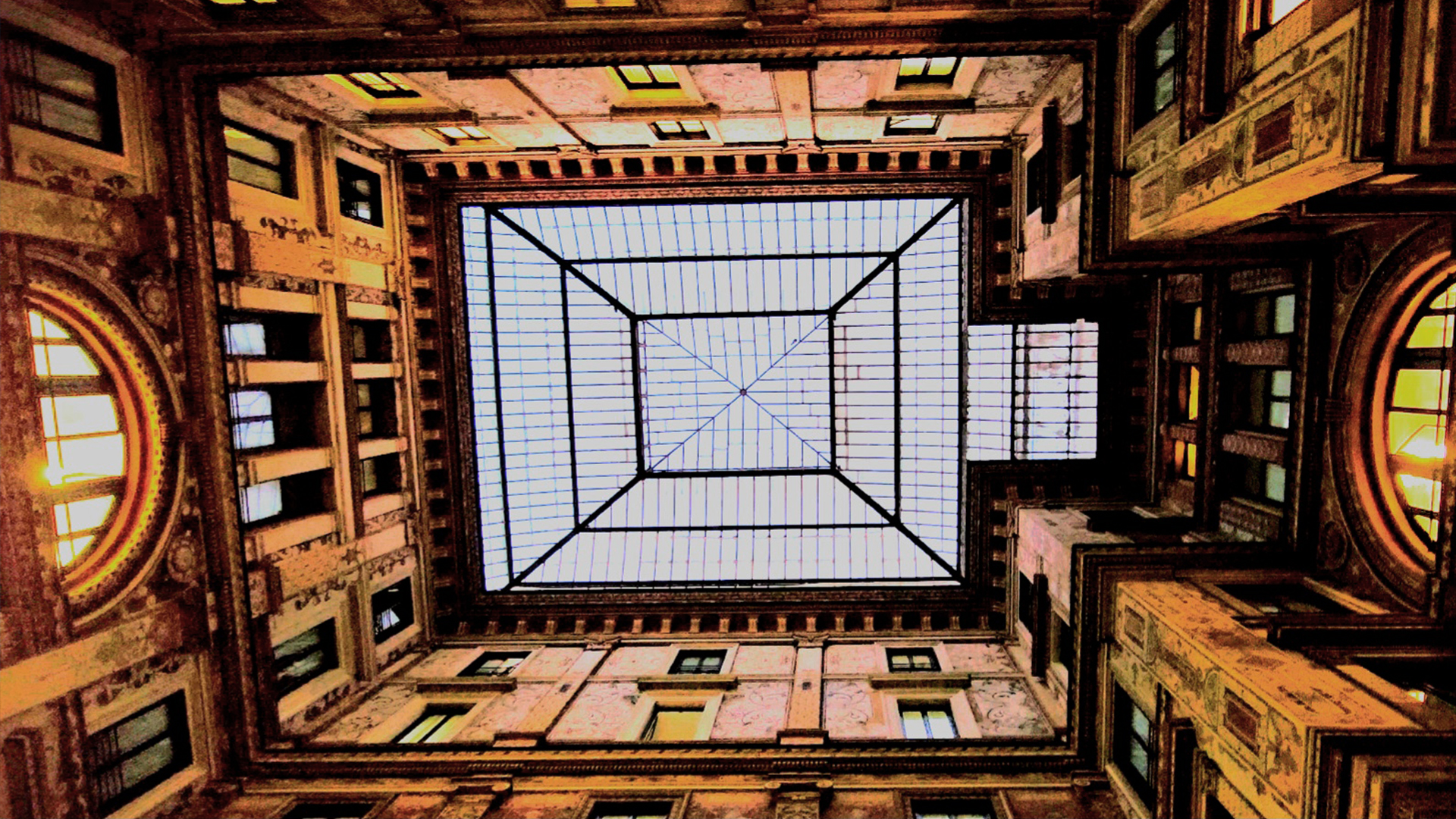
The space appears as a simple covered pedestrian passage cutting through the block. Giulio De Angelis, captivated by the English Liberty Style, transformed a narrow void into a luminous organism, a small vertical theatre where decoration invokes. The light, filtered from above, descends, settling on the walls like a secular blessing, turning walking into an act of participation, as if the architecture itself were asking to be crossed with slowness, with attention.
Today, Galleria Sciarra remains one of the rare places in Rome where Art Nouveau is a living presence, a fragment of modernity set into the heart of the city. Here the function of passage dissolves, opening into an experience that is no longer movement, but a crossing that leaves a trace.
Vision
Ionone YouTube Short
Colosseo/Fori Imperiali station
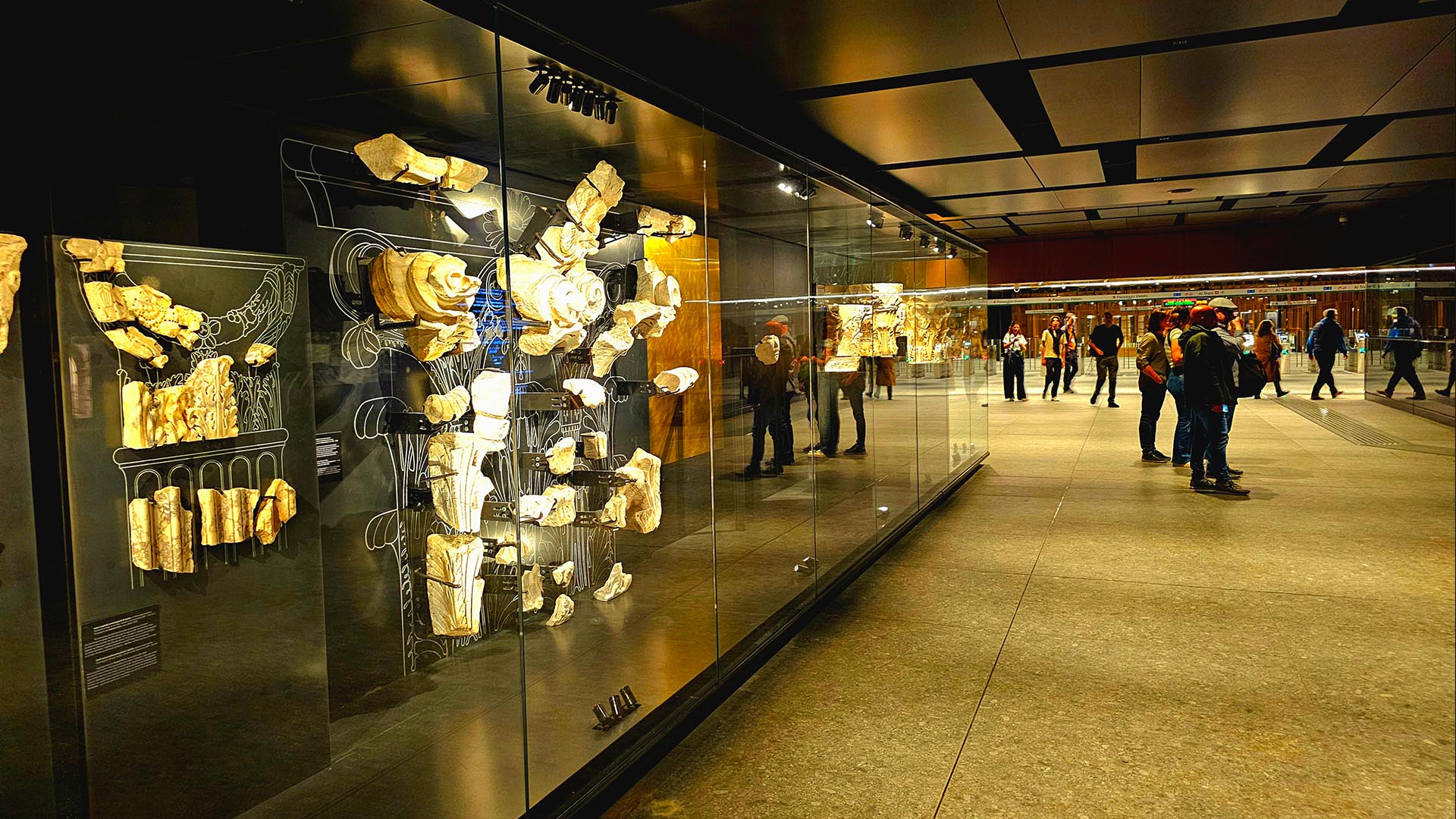
A replicable model of a distributed museum, Rome’s Colosseo/Fori Imperiali station presents itself as a participatory infrastructure in which heritage is not merely displayed but allowed to breathe: an underground organism that returns memory to citizens as a living experience.
Here, transit becomes ritual. The ruins uncovered more than twenty meters below ground surface like the veins of a buried time, allowing the excavation to transform into a daily public space, a thresholdless environment, freely accessible without ticket or barrier, woven into the city’s rhythm. The metro becomes a place where mobility and archaeology intertwine, opening the journey to an unexpected form of contemplation, where the past is no longer distant but vibrates, silently, beneath the footsteps of travelers.
Cloister of the Minerva
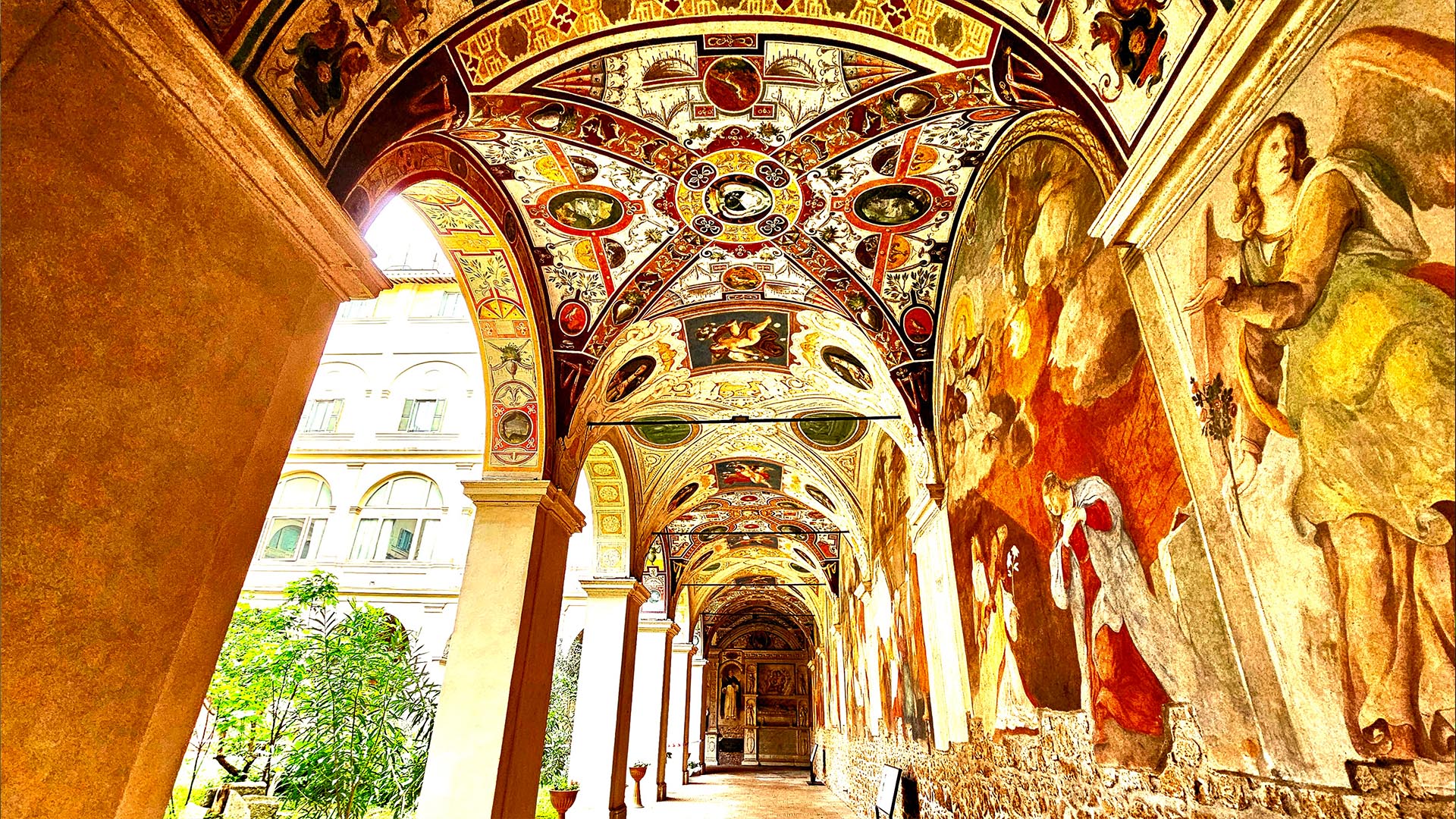
In the sleepless core of the city, behind a door that refuses the gesture of opening, the Cloister of the Minerva inhales and exhales like a creature made of compressed radiance. A perfect square, a cosmic frame where matter arranges itself into order. The arcades act as membranes, thin thresholds that sift the world into fragments: annunciations, visitations, crucifixions, ascensions, frequencies, currents sliding through the stone as if the mineral body were listening.
Now that the cloister is sealed, its charge intensifies. It becomes a sigil, a chamber of suspended resonance, a generator of meaning that grows precisely because it has withdrawn from the visible: an architecture that continues to act even in absence, even in silence, even in the dark.
Piazza San Giovanni in Laterano
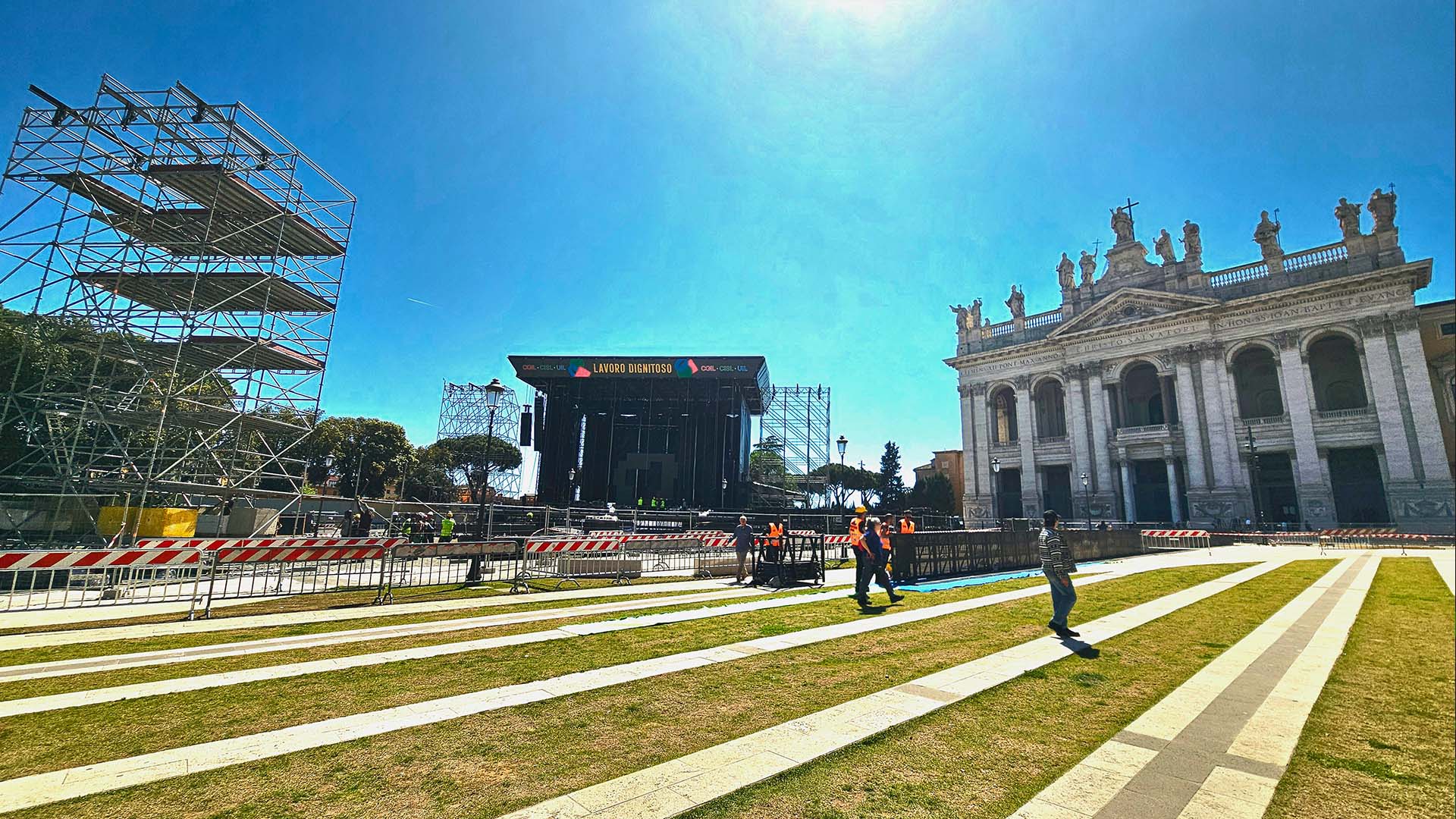
Piazza San Giovanni in Laterano hosts the oldest basilica in the Christian world, the cathedral of Rome. It is a threshold, a boundary zone where the city’s two souls, the sacred and the civic, meet not to clash, but to remind us that work is not merely an economic matter: it is a human, social, and spiritual one.
The May Day Concert is held here every year, drawing hundreds of thousands of people and transforming the square into a vast civic and musical space, a collective organism that vibrates between memory, celebration, and participation. It is a modern day of remembrance for labor, recalling that work is both a duty and, above all, a fundamental right in an evolved society, a principle that unites the city in its deepest and most shared dimension.