Design of New Words
The Vision of Things
- Design of New Words
- The Vision of Things
- Notes from a Future Past
- [1] [2] [3] [4]
- From the Imaginary to the Real: The Materialization of the Incorporeal
The Vision of Things
First of all, the field must be divided into two distinct parts:
the real and the imaginary. The vision of things properly so called and that of imagined things have as their only substantial difference the fact that the former possess a physical body; the latter, although they exist, possess only an incorporeal image—or a corporeal one in a different dimension.
Thought possesses as many dimensions as exist in the world of the real, differing from the latter space in the concept of limit. Indeed, the real dimension imposes a certain limit, whereas the imaginary one has other limits, of a different nature. The first type of limit excludes possibilities outside the physical world, including all the properties and laws to which it is subject; the second admits limits of realization, time, and space—that is, those to which we are habitually bound through the body.
Note [1]
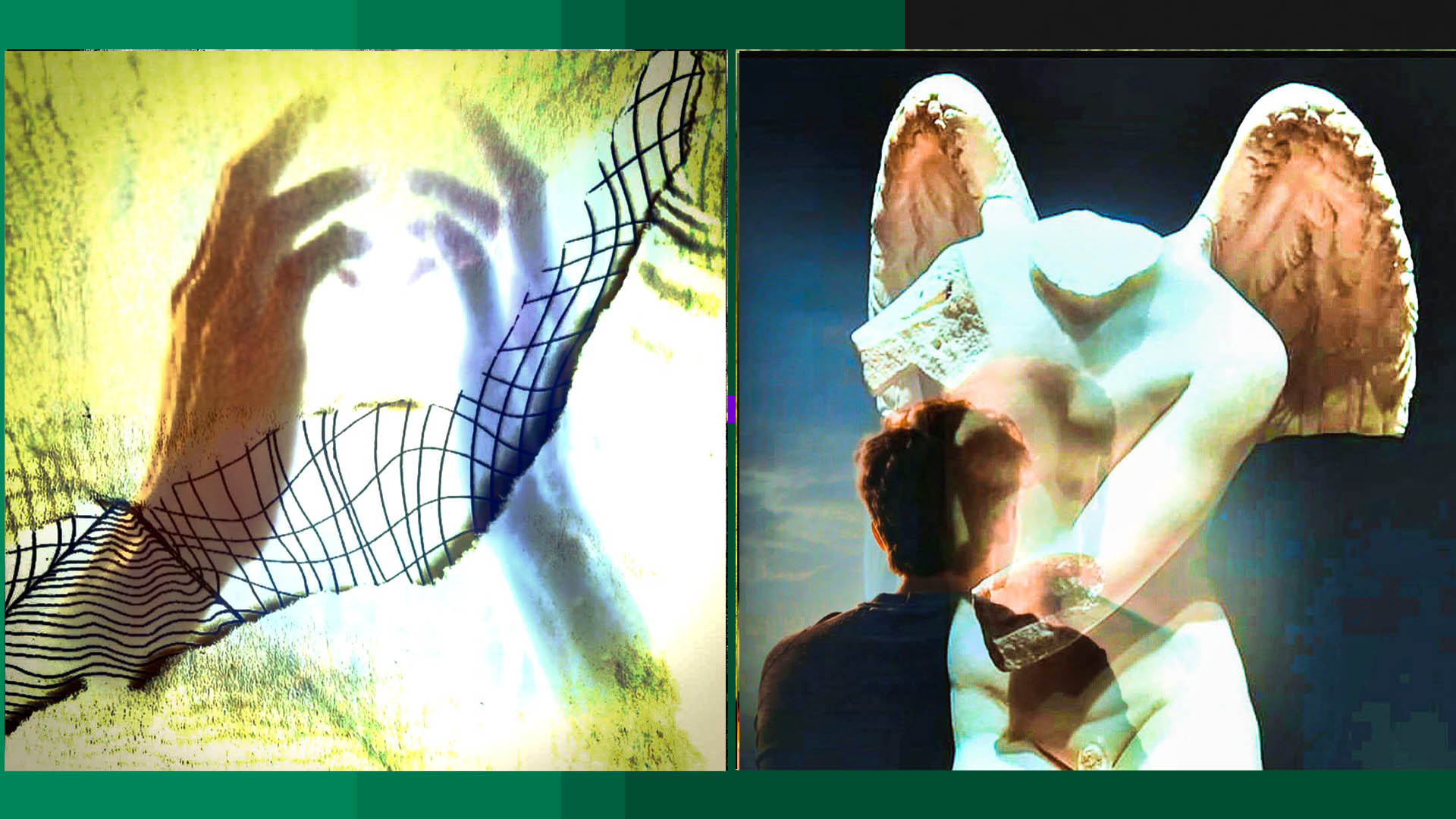
By trying to enter into the perspective of the Imaginary, one overcomes a long series of habitual limitations: one can imagine flying over a city, penetrating a stone column, discovering different visions of the same object, thus coming into contact with what has always been called imagination.
Creation ex novo, which in reality is never truly such, since it draws upon memory to elaborate the themes it addresses, does not exist even within the realms of the Imaginary, because the generating substance is unique: the unconditioned essence of ourselves remains the same across all the possibilities toward which we turn. It is precisely this uniqueness of our being that makes even dreams, or the Imaginary, rational.
Note [2]
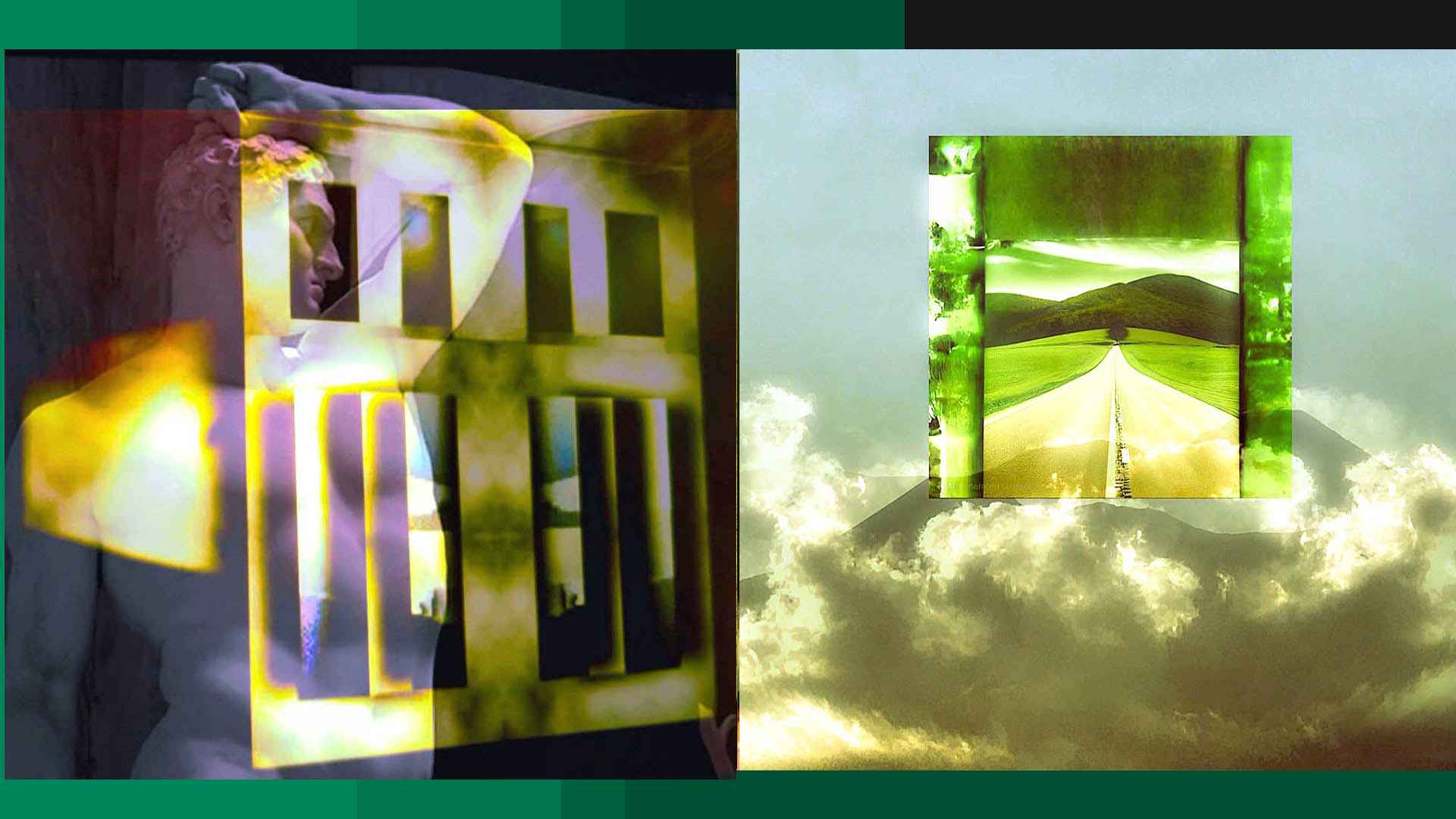
The art of seeing things is closely related to the way we conceive them within our minds. The connection between objects and the ideas we form of them determines which of them engage our attention and which do not. This is why we tend to favor certain forms over others, according to their particular geometric connotations.
The representation of forms draws upon information belonging to both the Abacus of the Real and the Abacus of the Imaginary. Whenever a form is represented, it is interpreted and translated according to the ways in which it has traditionally been perceived or imagined. In some cases, when stereotyped objects have previously been associated with alternative visual interpretations, a process of representational transposition occurs.
Note [3]
The process, by making use of precise rules, allows the simultaneous elaboration of symbolic associations, knowledge of different kinds, attitudes toward a given object or topic, aesthetic preferences, and different experiences of perception of the thing.
All these components acquire quality when they are supported by knowledge and motivated by conviction. From this awareness arises the need to know and to make concrete, as an operational possibility, the capacity for interchange between the Real and the Imaginary.
Note [4]
The contact between the two worlds of image perception is continuous and uninterrupted. They do not appear as separate domains, but rather as different states of the same perceptual reality. Through reason, however, we are able to distinguish them, recognizing their different modes of operation. Such a distinction allows us to quantize the possibilities of reality and to select them according to the principle of realizability, separating what can assume form from what remains within the field of potentiality.
In the image of a door, for example, it is possible to recognize different perceptual frameworks belonging to the same subject.
The first framework is the immediate one: the image of the door as it is encoded by consciousness. It coincides with the recognized archetype, with the shared definition of the object. It is the generalized photograph of the door, its conventional and universally identifiable form.
A second framework follows, subjected to a more intense process of rationalization. Here, the door is reconstructed according to aesthetic criteria that seek a deeper grounding within the repertoire of the known. The image acquires clarity, precision, and coherence; its physical and symbolic characteristics emerge more distinctly, and its presence becomes more stable within mental space.
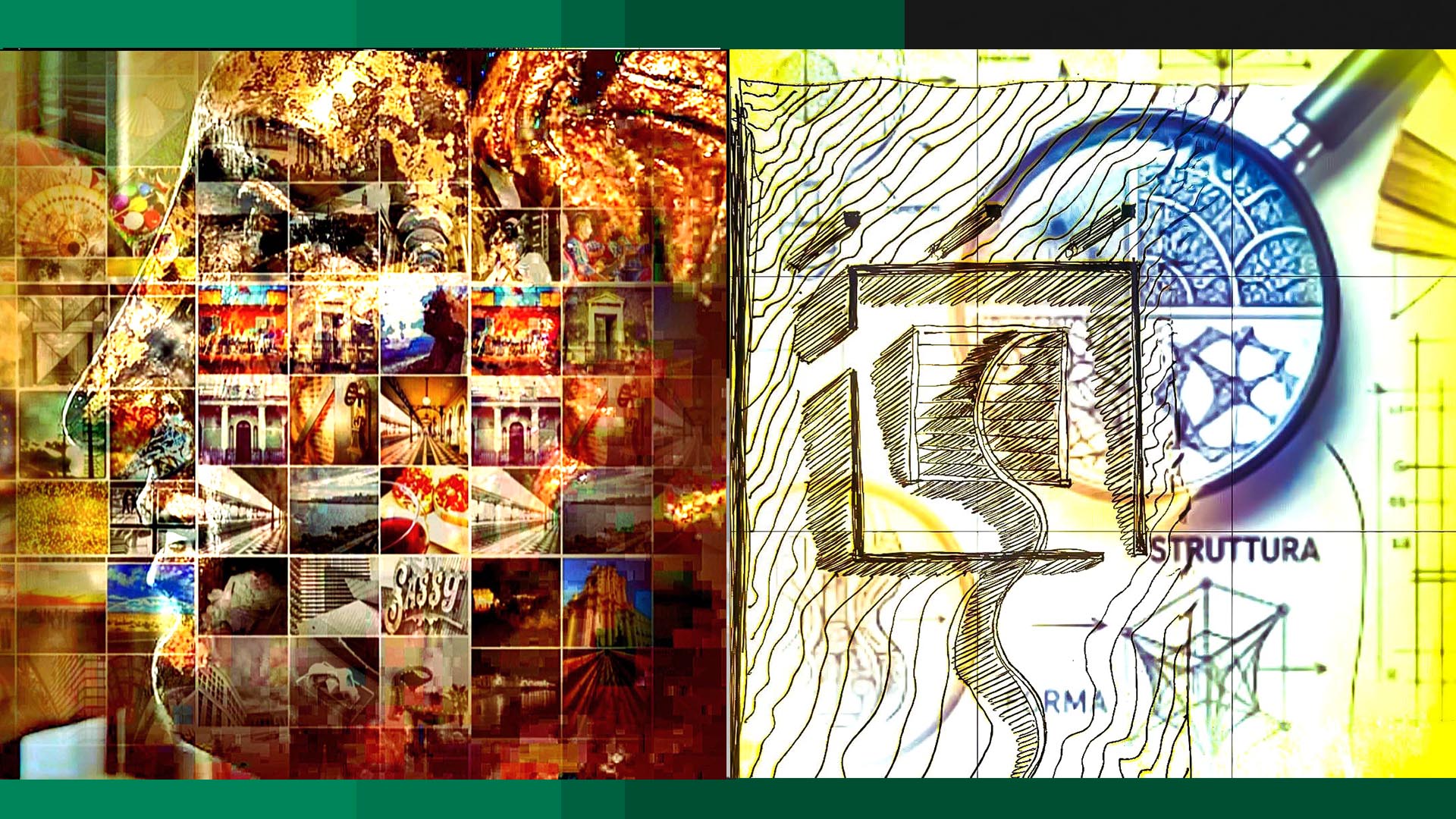
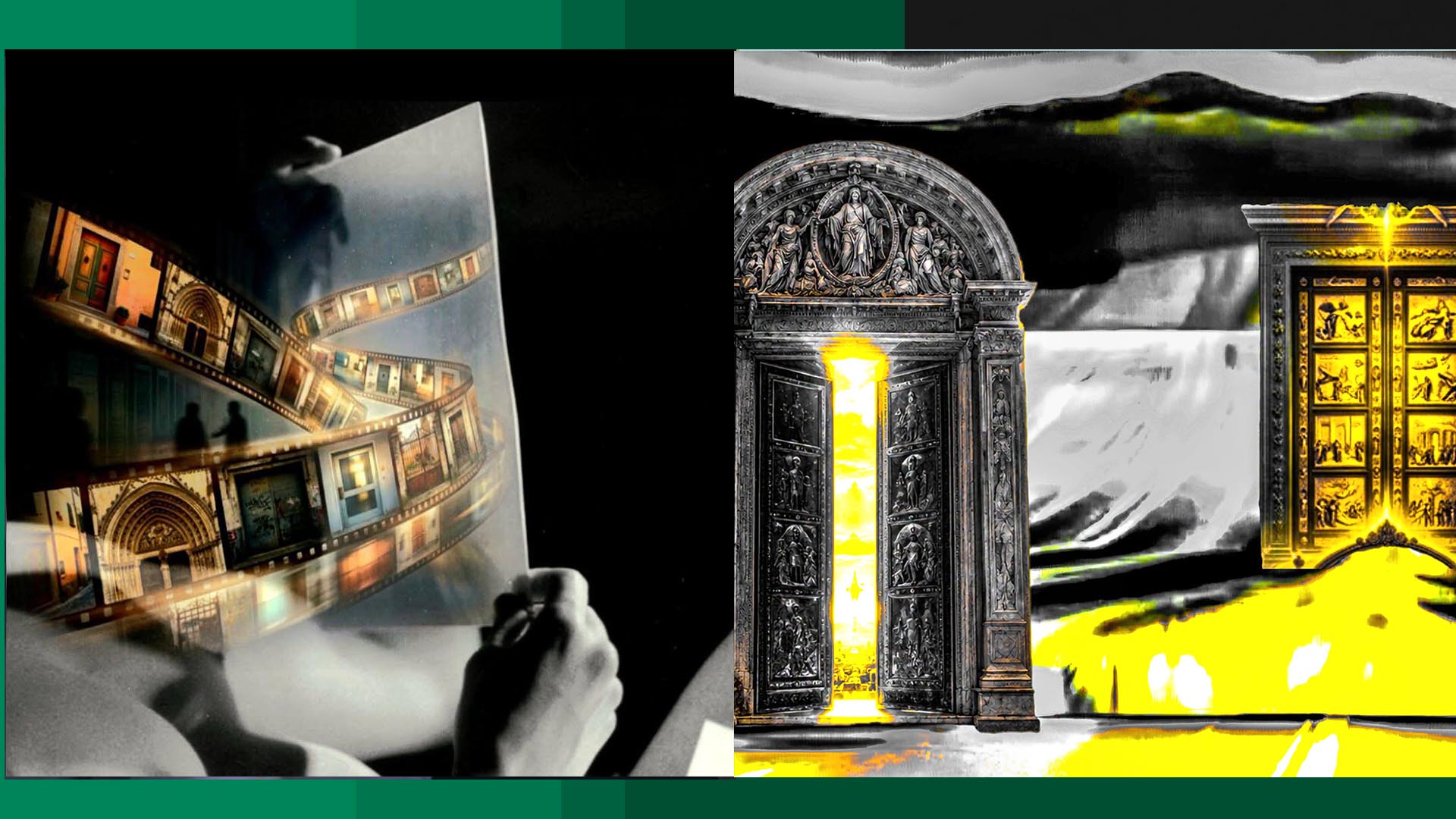
In the third framework, the fragmented continuum appears. The image is no longer unitary but dissolves into a constellation of fragments arising from memory. Doors already seen, crossed, and remembered emerge as traces of experiences deposited in time. These fragments assemble themselves into a dynamic sequence resembling the frames of a cinematic film. We are no longer facing a single door, but rather a genealogy of doors resurfacing from the historical archive of experience.
Upon these primary frameworks are subsequently superimposed the configurations generated by imagination. Within this territory, form emancipates itself from physical necessity and traverses the very boundaries of representation. Fantasy combines and transforms, overlays and dissolves; it manipulates the possible and the impossible, the mystical and the symbolic, instinct and reason, the coded and the uncoded.
Images no longer obey the laws of material reality, but those of a further logic, capable of constructing worlds that do not exist and yet become perceptually inhabitable.
At this point, the immediate possibilities of the image represented in a state of repose are exhausted. The figure remains motionless, suspended in a condition of equilibrium. Beyond this threshold, however, a different phenomenological order unfolds: that of the image in motion, where time enters representation and the succession of states generates the dynamics of transformation. Here perception ceases merely to contemplate form and begins instead to witness its becoming.
The transition to the subsequent frames introduces the moving image. Representations are no longer static and fixed; instead, figures transform over time and activate a narrative dynamic. It is at this point that the power of myths, legends, and stories connected to the door and the act of passing through it comes into play, together with all the associative ramifications that derive from them.
At this stage, a characteristic condition of apparent confusion may emerge, though it is never truly confusion. Associations reveal themselves according to a precise sequence, governed by the laws of individual memory and by the paths it traces between images, experiences, and meanings.
This phase of development belongs largely to the sphere of the Imaginary, of the imagined, and of the possible. Within its field of frequencies dwell the poet, the composer of forms, the creator of worlds and configurations, that part of ourselves which operates through the symbolic transformation of reality.
Thus, the Door of Miracles, the Holy Door, the Gate of Paradise, and the door of the mind or of knowledge become interwoven with doors that have been seen, remembered, imagined, or dreamed. Associated with them are the many acts that define our relationship with the threshold: crossing it, opening it, closing it, leaving it ajar, walling it up, guarding it, painting it, transforming it, constructing it.
Each of these possibilities can in turn generate a new field of action and development.
The construction of the door leads to the sphere of creation; creation leads to that of composition; composition leads to the invention of new forms not yet codified. The door thus reveals itself not merely as an element of passage, but as a generative device, capable of opening further territories of imagination, design, and work.
Matter, which better than anything else realizes the idea, constitutes a component parallel to the construction of the graphic image. These two dimensions should not be considered distinct phases of the project, but simultaneous processes that continuously verify one another. The more matter and representation proceed along the same conceptual trajectory, the more the project acquires coherence between its ideal content and its figurative configuration.
Returning to the example of the door, the appropriate material will be the one that most immediately associates the idea of a door within the mind. At first glance, this material appears to be stone.
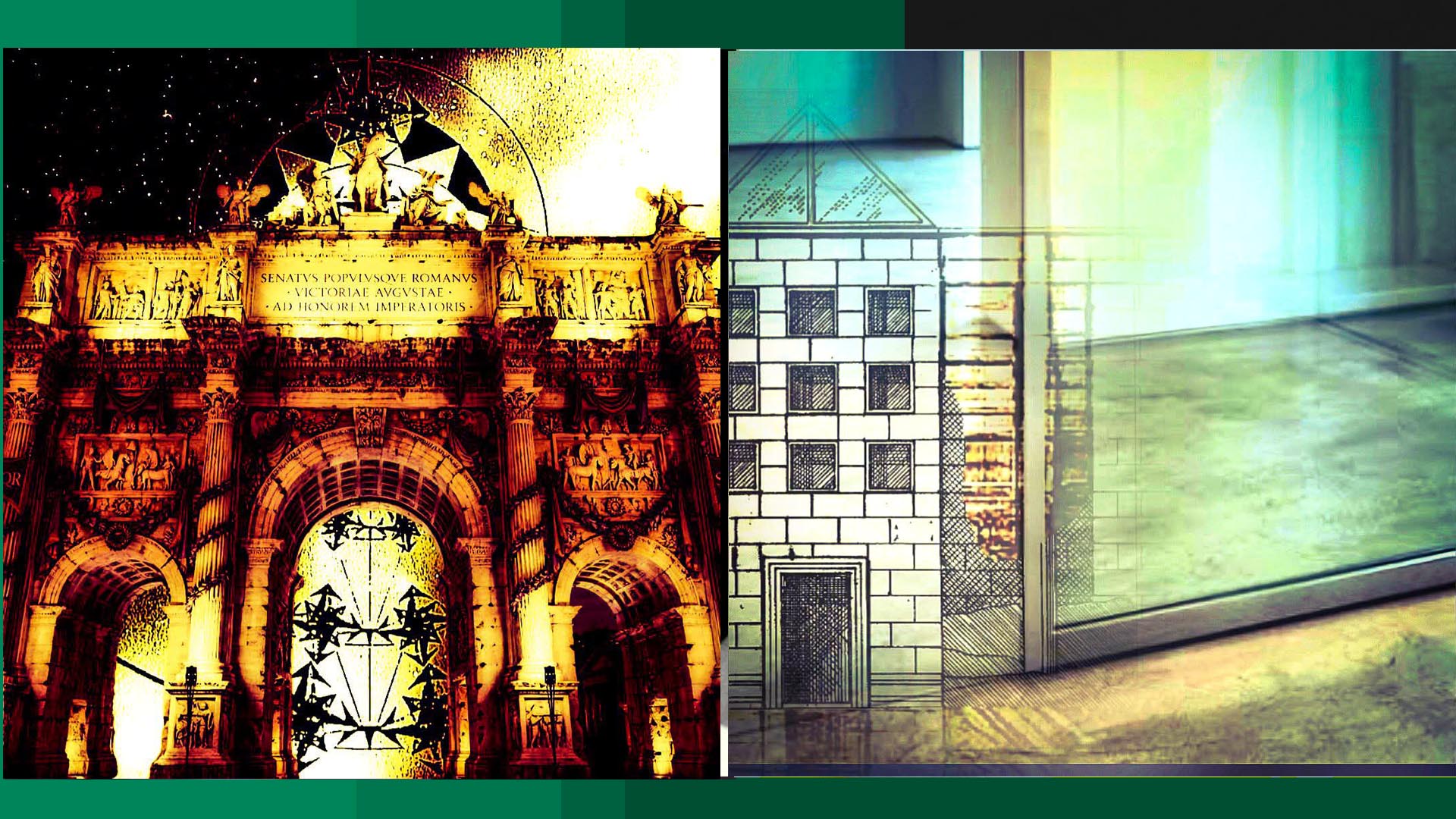
Stone, however, does not properly correspond to the door itself, but rather to its permanent limit: the frame, the portal, the constructed threshold. The image evoked is that of the monumental gate, the triumphal arch, or the domestic doorway; images which, despite differing degrees of collective representativeness, share the quality of permanence. Even when the door itself disappears, its stone structure continues to testify to the place of passage. Stone thus emerges as the archetype of the threshold.
The material of the door as a movable and functional element is instead wood, which reactivates the memory of ancient city gates, defensive systems, and architectures of dwelling. Wood introduces a temporal dimension linked to use, wear, and transformation.
Subsequently, metal and glass appear. The former accentuates the technical character of closure, transforming the door into an apparatus of defense and control; the latter leads the concept toward its theoretical limit. Glass represents a form of negation of the door itself: an absence of presence, a condition of reflection and transparency. The threshold remains as a spatial condition, yet loses its opaque character as a separator, becoming instead a visual relationship between spaces.
At this point, Type intervenes, through which the projective imagination confronts the real, physical, and functional dimension of the object. Typology constitutes the moment of verification within the project, the passage from analogical association to the concreteness of a buildable form.
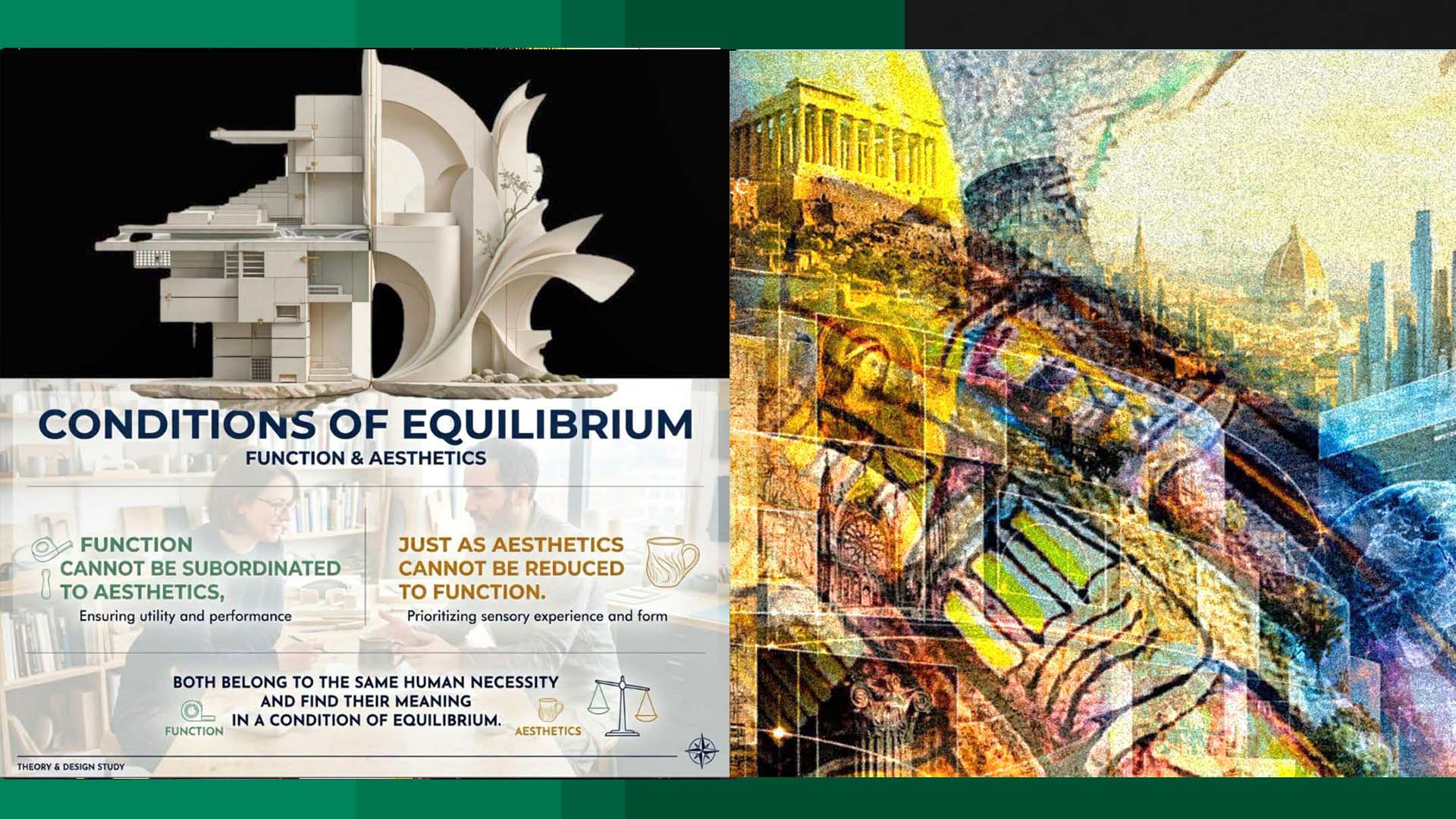
Function cannot be subordinated to aesthetics, just as aesthetics cannot be reduced to function. Both belong to the same human necessity and find their meaning in a condition of equilibrium. Whenever one absolutely prevails over the other, the project loses its unity.
Alongside the ordinary typology of the door, there emerges a broader set of historically determined configurations, including exceptional forms, variations, and figures codified by tradition. Among these belong the repertory of symbolic and sacred forms that culture has progressively defined through historical, religious, and aesthetic references. Such forms constitute for architecture what the Vatican Palaces, Dante's Divine Comedy, the Old Testament, and the New Testament represent for cultural memory: complex systems of meaning stabilized through time and continuously reinterpreted.
Typological analysis therefore precedes the decomposition of the representable object. At this stage, the work is disarticulated into its constituent elements, identifying those minimal units endowed with formal and semantic autonomy.
As in a mosaic, the complete image is composed of a multiplicity of elementary particles. Each preserves its own figurative identity, yet acquires full meaning only within the overall configuration. These units are the living cells of the image: minimal elements of memory and form that, through their aggregation, make possible the construction of the whole.
Decomposition is therefore not a reduction of the work, but a cognitive procedure. Through the identification of these figurative cells, the project recognizes the generative principles that govern the formation of form itself and make possible its continual regeneration.
The subdivision of the object into its essential components initiates a process of progressive investigation in which each part emancipates itself from the original totality and becomes an autonomous project, while continuing to belong to the generative unity from which it derives. Each fragment thus takes shape as a complete organism, both part and whole at the same time.
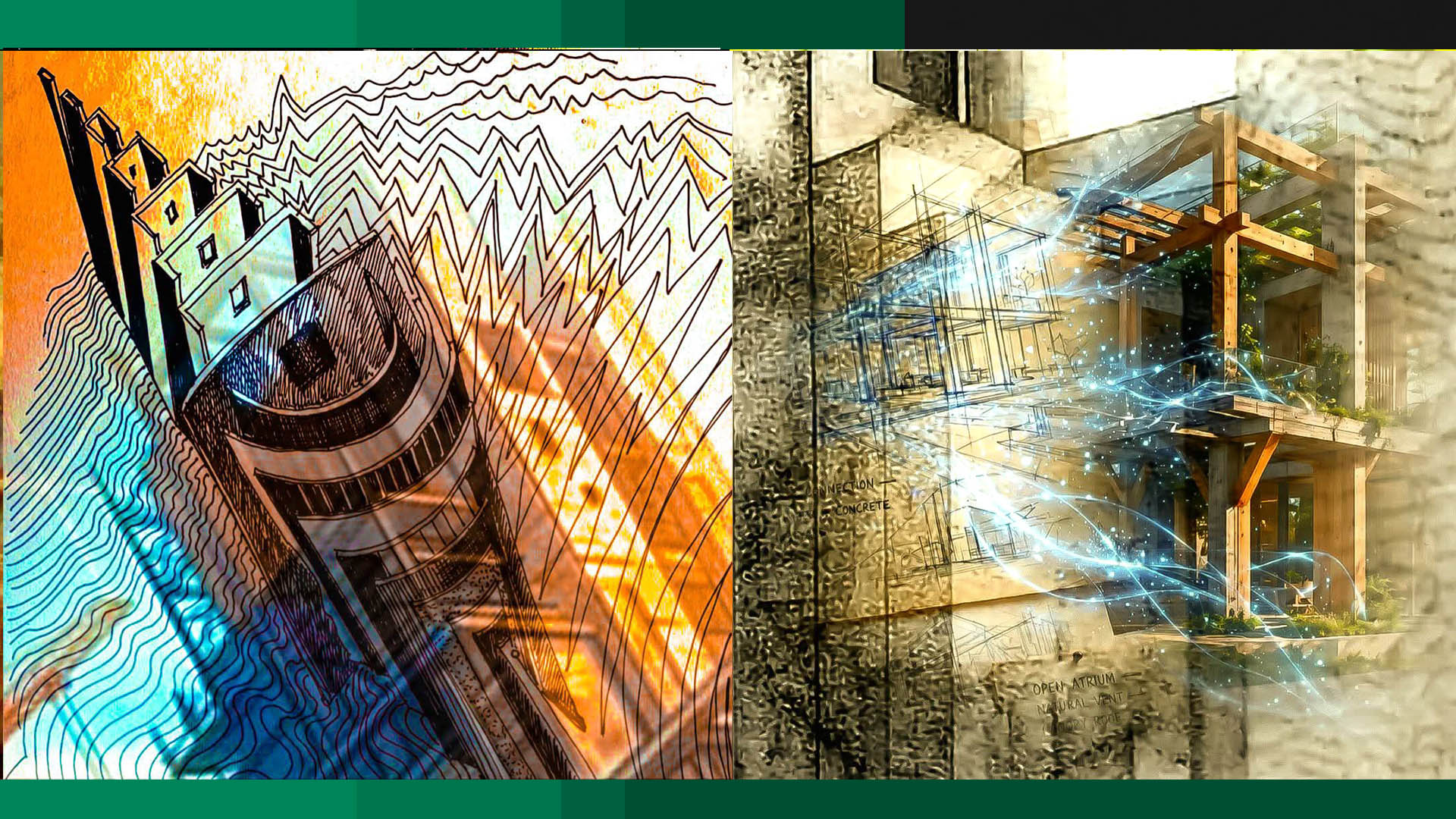
A distinctive feature of this process is the zoom effect, through which intermediate spaces of form emerge: hidden territories where the image dissolves only to regenerate itself into new autonomous identities. Within these dimensional thresholds, form acquires an existence of its own, reveals an internal logic, and presents itself as an independent structure, capable of becoming a unique form in itself.
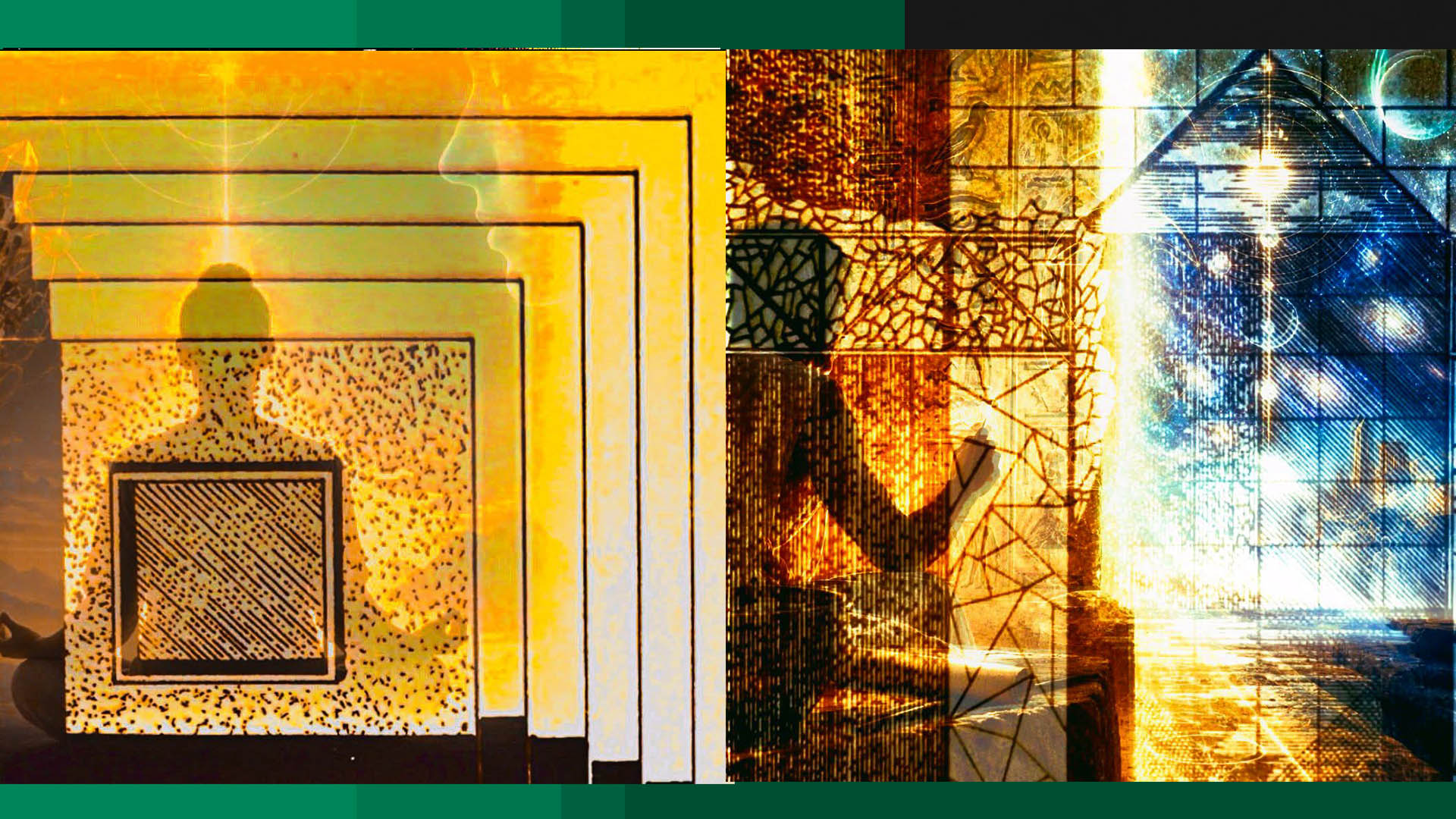
The state of meditation, whether it is one in which the mind comes to rest upon a specific object or one in which it operates through thought, constitutes a useful and necessary form of contemplation.
Through meditative techniques, it is possible to achieve two distinct results. The first consists in concentrating on a specific object, progressively assimilating its qualities until a condition of complete symbiosis is attained: entering into matter, penetrating its structure, observing it from within, and understanding its deepest nature. The second consists in processing, through thought, the data provided by images and by memory, transforming perception into knowledge.
From "Design of New Words"
The Vision of Things by Filippo Lo Presti 1989
Notes from a Future Past
Note [1]
AI, virtual reality, and digital economies are dissolving the boundary between the corporeal and the incorporeal. Ideas, images, identities, and goods born as pure abstractions now acquire real presence, value, and efficacy. Simulation no longer merely represents the world: increasingly often it anticipates it, orients it, and generates it.
Note [2]
My text challenges one of the greatest myths about imagination: the idea that creation consists of generating something out of nothing. On the contrary, when one adopts the perspective of the Imaginary, a fascinating paradox emerges:
The illusion of pure creation.
Every flight of fantasy, even the most abstract or surreal, such as penetrating the solid matter of stone, inevitably draws upon the reservoir of memory. The mind does not invent new fundamental building blocks; rather, it recombines, transforms, and expands lived experience.
The unity of the generative substance.
The origin of any imaginative projection always remains the experience of the subject. We cannot step outside the horizon of our own being; even in the most remote abstraction, we carry with us our perception, our sensibility, and our psychological structure.
The rationality of the dream.
Since the Imaginary and dreams arise from the same unconditioned source as our identity and lived experience, they are not chaos or nonsense at all. They possess their own deep, coherent, and structured logic. The dream is rational because it responds rigorously to the internal grammar of the one who generates it.
In this view, the Imaginary is not an escape from reality, but another mode of exploring oneself and the real: a space in which the laws of physics are suspended, while the law of personal identity remains intact.
Note [3]
In the creative process of architecture and design, the concepts of the Abacus of the Real and the Abacus of the Imaginary may be understood as the two major mental repositories from which architects draw in order to conceive, transform, and give form to spaces and objects.
The Abacus of the Real encompasses constructive forms consolidated by history, such as the column, the arch, the pitched roof, and the chair. It also includes direct knowledge of material properties, the principles of structural behavior, and the processes of industrial production. Furthermore, it coincides with the physical context within which construction takes place: topography, solar orientation, urban precedents, and natural elements.
The Abacus of the Imaginary, by contrast, comprises a repertoire of visions, suggestions, emotional memories, metaphors, and utopias that belong to both the individual and the collective unconscious. Within this dimension, form is considered not only in terms of its function, but also in relation to what it evokes and suggests on a symbolic and emotional level.
Utopia, finally, enables the configuration of spaces capable of responding to needs that have not yet been expressed, challenging conventional perceptions of places and objects.
The genuinely creative moment of the design process does not consist in choosing one abacus over the other, but rather in generating a fruitful transposition and a productive short circuit between them, allowing reality and imagination to enter into dialogue through a continuous process of mutual transformation.
Note [4]
Today this process, founded on the interaction between rules, symbols, knowledge, and perceptions, is to a large extent automated, distributed, and enhanced by digital technologies. New technologies are increasingly configured as an active infrastructure of this interchange between the real and the imaginary, expanding its possibilities of connection, elaboration, and representation.
The quality of this process, however, does not depend exclusively on technique. It continues to be founded on human motivation, knowledge, ethical responsibility, and the capacity to maintain critical thought. In the absence of such preconditions, technology does nothing but amplify noise and dispersion; when it is oriented by them, however, it becomes an instrument of creation, understanding, and awareness, capable of transforming imagination into knowledge and knowledge into new reality.
From the Imaginary to the Real: The Materialization of the Incorporeal
Today, the boundary between corporeal reality and the incorporeal realm of imagination has grown increasingly thin. Virtual objects, holograms, and augmented environments are no longer mere illusions: they occupy space, persist through time, and produce tangible effects within society and the economy.
Likewise, avatars and digital identities, although lacking physical bodies, exist in a real sense because they generate relationships, emotions, labor, and value. Artificial intelligence, through generative models, extends human thought by transforming abstract ideas into images, texts, sounds, and shareable worlds, making visible and objective what previously remained confined to individual imagination.
Paradoxically, even digital spaces continue to rely on human and corporeal categories: skies, floors, gravity, and temporal sequences. The same occurs in the digital economy, where cryptocurrencies and virtual assets, born as purely computational abstractions, acquire real efficacy capable of influencing markets, wealth, and physical exchanges. Moreover, simulation increasingly precedes reality: architectures, surgical procedures, automobiles, and infrastructures are first designed and tested in virtual environments before being realized in the physical world.
The contemporary era is therefore characterized by a convergence of the real and the imaginary, of the corporeal and the incorporeal. What originates as digital abstraction gradually acquires operational, social, and economic substance, ultimately becoming an integral part of reality itself.
Notes from a Future Past
Filippo Lo Presti 2026