Meaning of the Form
On the Faculty to Produce Perceptions of Absent Sensible Things and on the Image of That Which Has Never Been Perceived by the Senses, Through Division and Composition of Images
The general sense, which encompasses and coordinates all other senses, perceives across multiple domains: physical entities, sensible phenomena, and ideas, whether present, absent, past, current, or future. All objects are, to some extent, sensible; at times merely visible, at others both visible and tangible, and so forth.
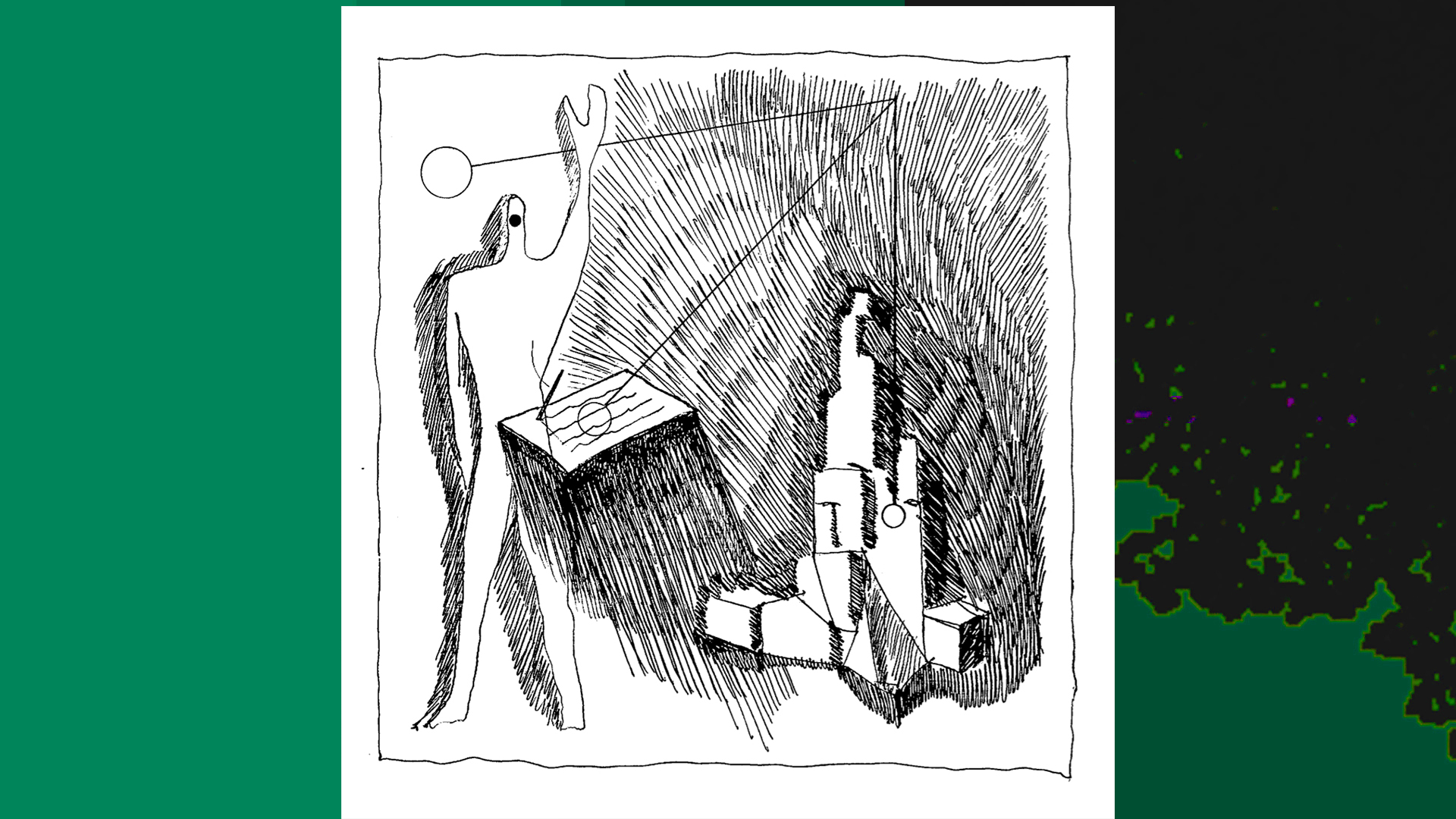
When an idea migrates from its initial state to a form of external representation, passing, for example, from a mental image to written form, a shift in rhythm occurs, an alteration of its prior stillness. If this transition unfolds with creative intent, it materializes in various forms: painting, sculpture, architecture, among the most evident.
Perception typically arises from the encounter between object and mind. However, when it develops between the perceiving mind and an absent object, the discourse requires clarification of terms such as “understanding.” Not everything that is present constitutes the totality of what exists; absence is discernible through the specific senses, not through the general one.
Attention, which governs both known and unknown senses, may also dwell on what is invisible or inaudible, on everything that can be grasped by the general sense. Instinct guides certain human inclinations, while reason stands ready to restrain potential deviations. Reason implies a precise regulation of thought.
The irrational is the escape of thought from reason: a finished product of an idea not subjected to reasoning processes and, therefore, resistant to rationalization. This cycle expands indefinitely, breaking into other expressive domains. Architecture is one of these: a field open to sensible expression.
At the moment of its emergence, the idea is irrational, not yet confronted with rationalizing processes. Its internal nature does not yet account for the subsequent, more or less canonical, alterations imposed by the external world. The process of rationalization, typical of emancipated cultures, compresses the internal idea within a grip formed by parameters aligned with political and social structures.
In art, this phenomenon is less subject to control, and thus more open, more unconditional.
From "Design of New Words" Meaning of the Form by Filippo Lo Presti 1989