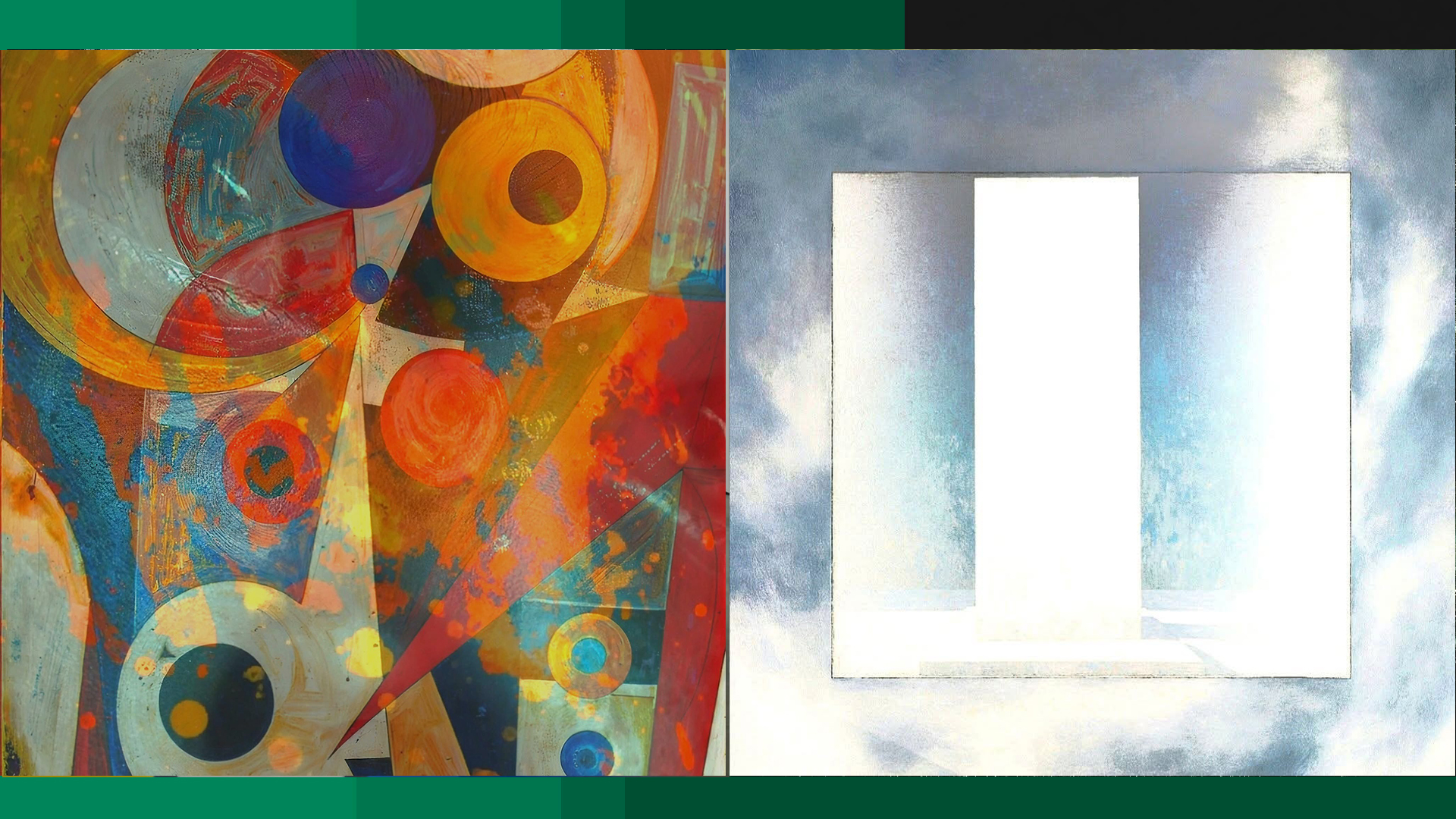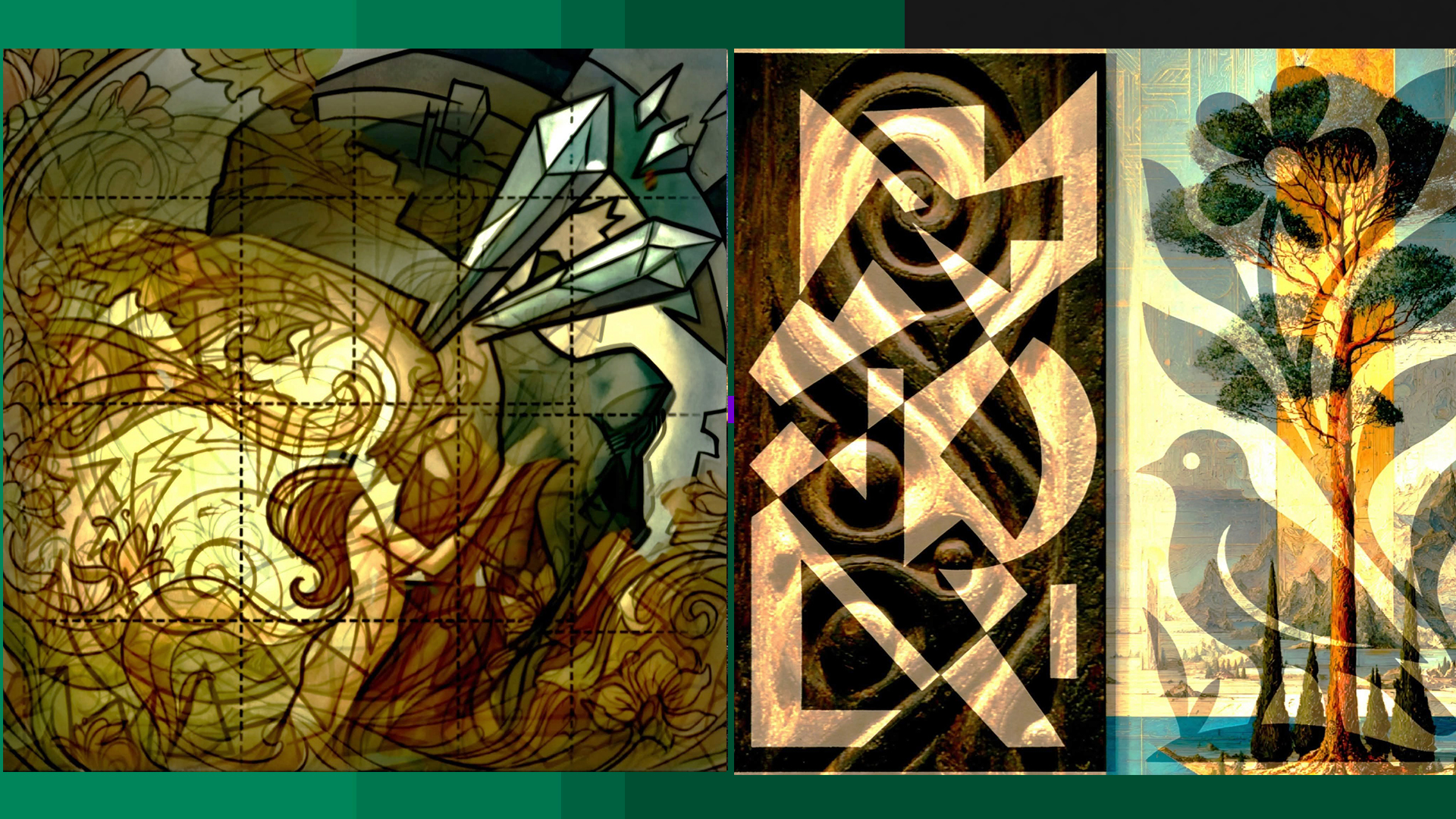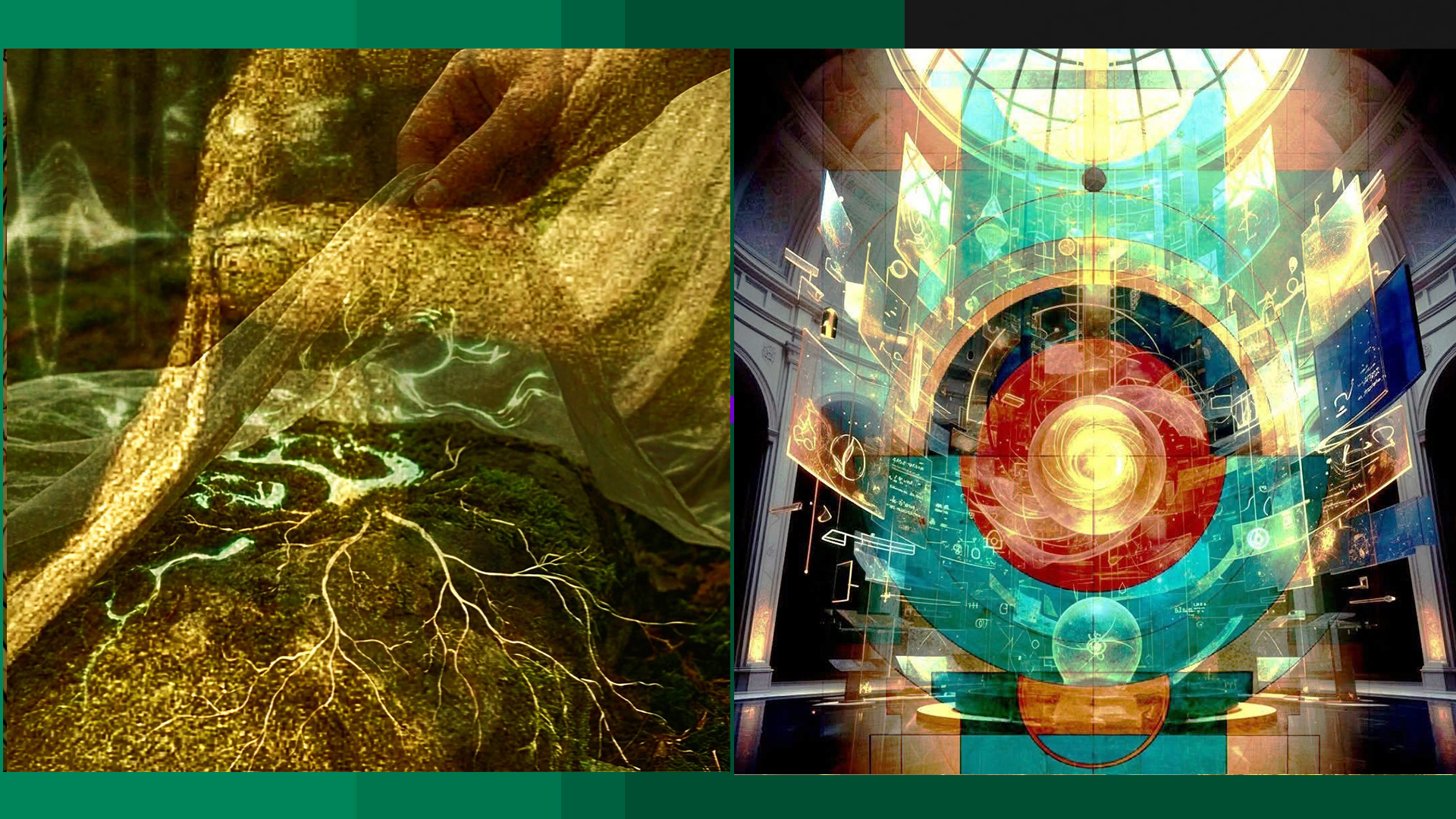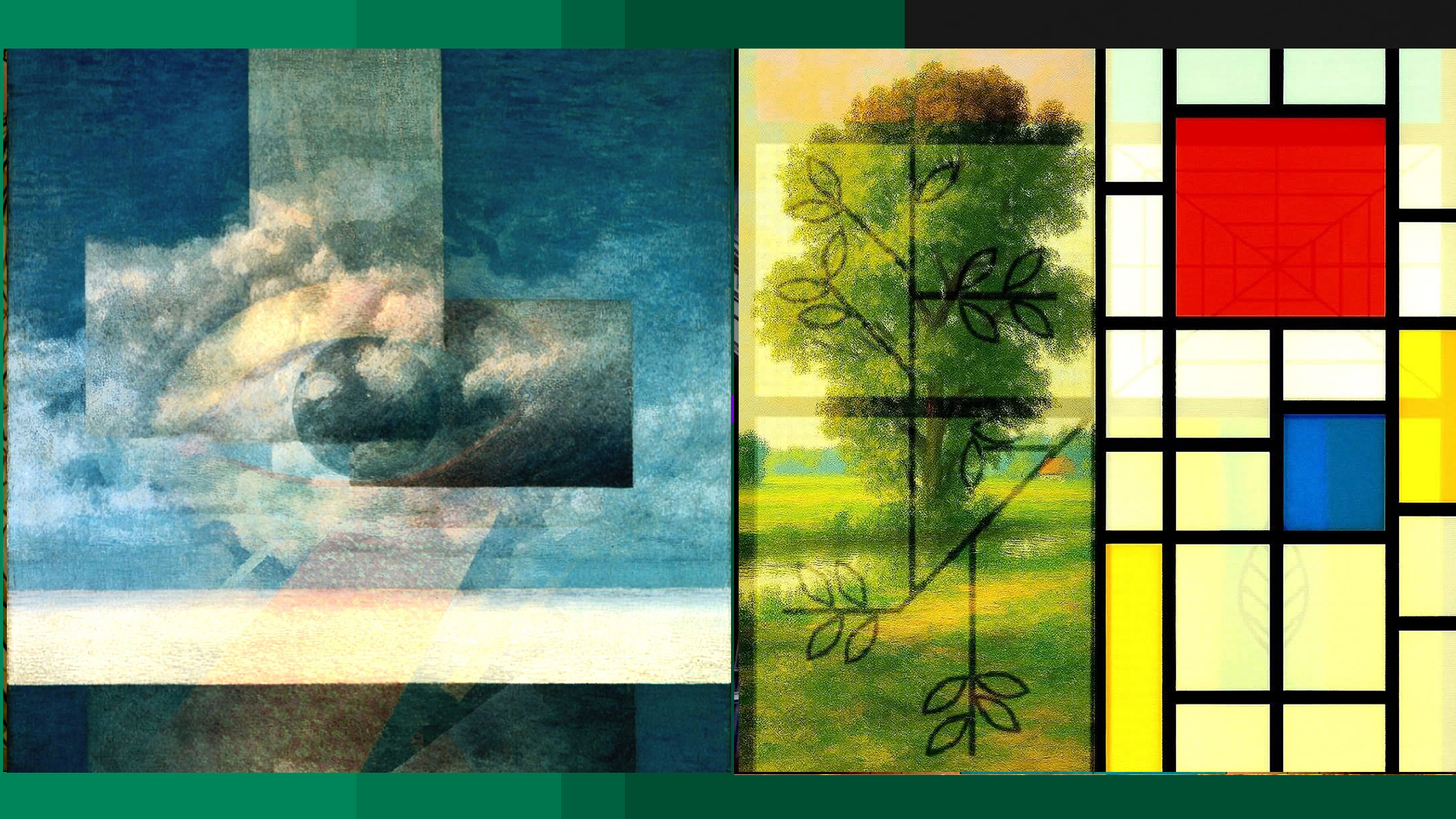
Super Realistic Abstraction
The artistic avant-gardes of the early 20th century,
together with their explorations of the interchange between the three spatial dimensions and time, conceived by Einstein's theory as a fourth dimension, established a profound link between scientific discovery and artistic vision.
Constant allusions to space-time concepts permeated both architectural and pictorial works, forging a dialogue in which art and science collided, converged, and diverged. These encounters found connective resonance in the Neoplastic poetics of De Stijl, as well as in the Futurists' radical rejection of science's presumed objectivity and impartiality.
Futurist antipathy toward science was driven by its refusal to grant a fantastical, liberating precognition of future events, and by their recognition of a dissonant parallelism between scientific rationality and creative inventiveness. In practice, this stance amounted to a paradoxical embrace: an acceptance of scientific theories coupled with their simultaneous rejection.
This contradiction is all the more striking given that the Futurists themselves were deeply engaged with studies on the energetic qualities of light and the analysis of motion—the very foundations that underpinned their own kinetic-dynamic theories and informed the optical-volumetric decompositions of space-time in both painting and sculpture.
It may be inferred, then, that the intention was not to suppress the vitality of life, but to discipline it, compelling its physical dominion to yield before the force of creative will, echoing humanity’s enduring impulse to shape and manipulate the world .
In this sense, language itself becomes a mode of abstraction: words establish a distance from reality, serving as representations rather than reality itself. The true origins of abstraction must therefore be sought prior to language, within the human capacity to reinterpret, transform, and reframe reality .
Modern abstract artists, in a certain sense, retrace the pathways of time, returning to avant‑garde techniques that feel almost as ancient as humanity itself.
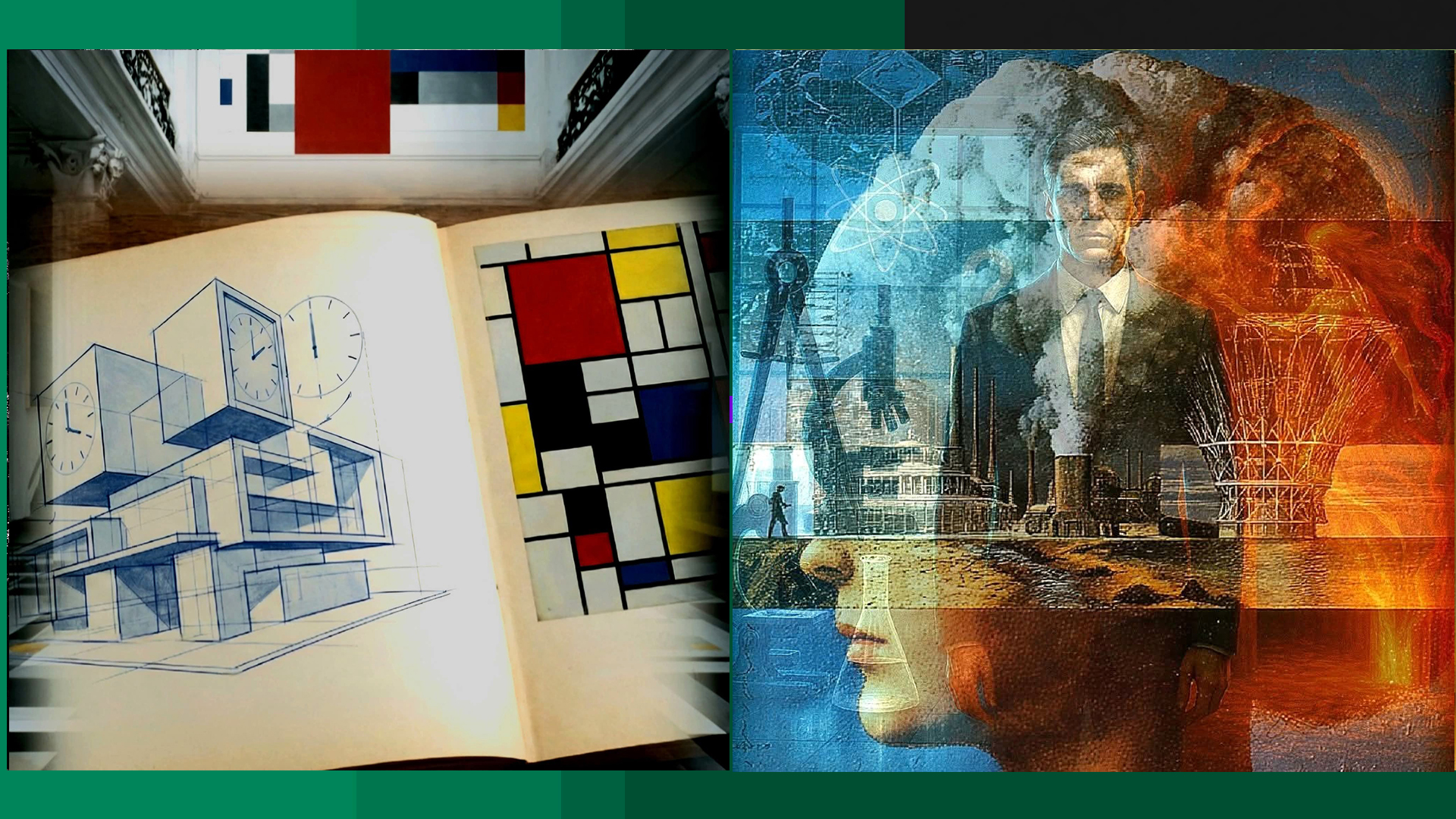
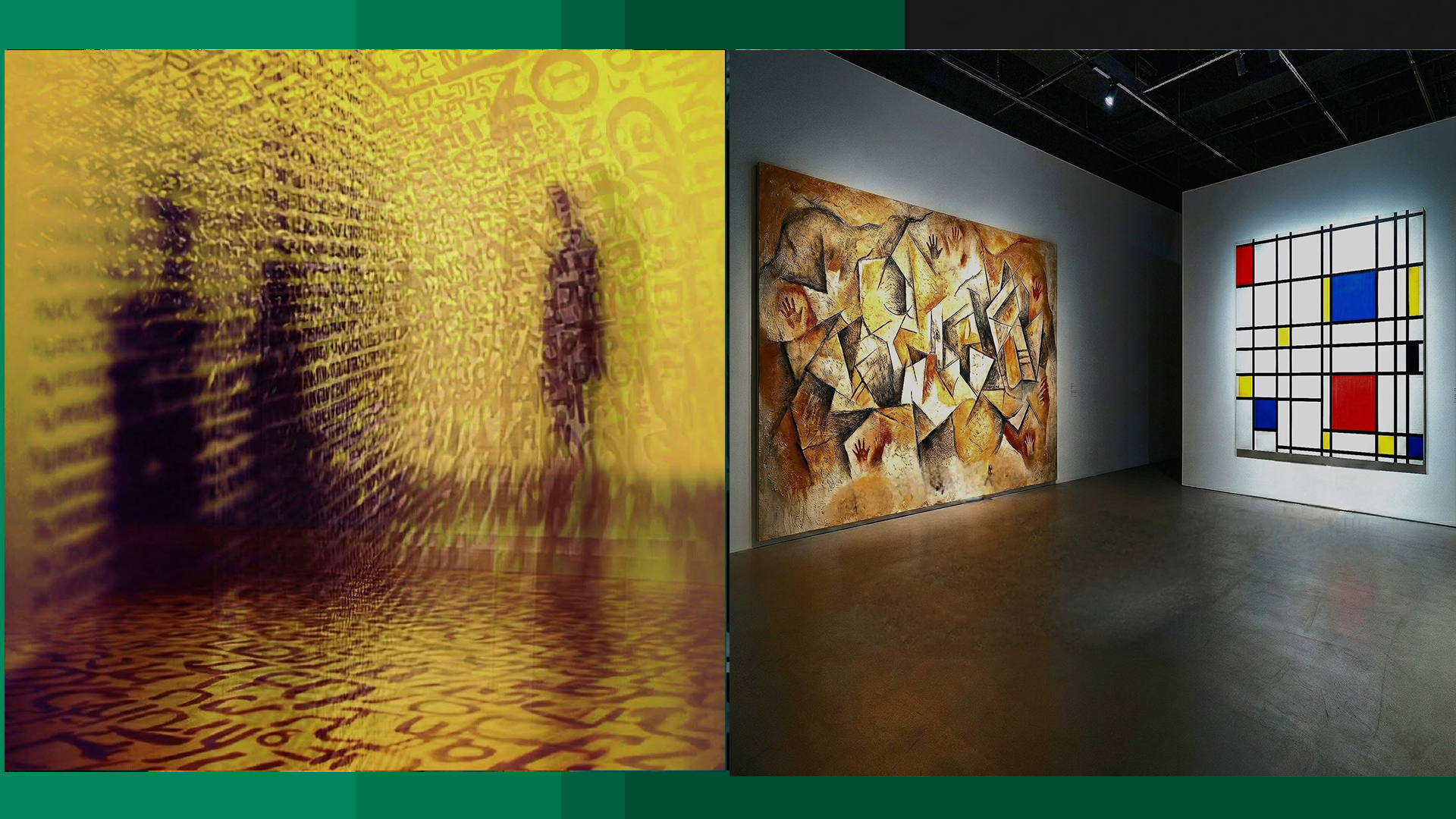
The pursuit of pure reality, so central to Neoplastic works, and especially to the painting of Piet Mondrian, emerges through a process that began with Cubism and evolved into Neoplasticism. This trajectory seeks not mere representation, but the revelation of absolute reality .
In The New Plastic Expression in Painting (1926), Mondrian insists that the true task of art is to express what is essential in both nature and humanity: that which is universal. His vision transforms painting into a vessel of clarity, where form and color are stripped to their essence, allowing art to embody the timeless resonance of reality itself.
The ambiguous terminology that separates naturalistic art from the art of nature both distances and reunites, by turns, the inseparable bond between humans and the imperfect relations perceived through the senses. This oscillation operates by introducing a productive estrangement: the signs of nature are abstracted, reconfigured, and returned as images that revise nature itself.
Kandinsky himself writes that, in time, it will be fully demonstrated that abstract art does not sever its connection with nature; rather, that connection is broader and more intense than it has ever been in any previous period. It is a matter of abandoning the "outer shell of nature," but not its cosmic laws.
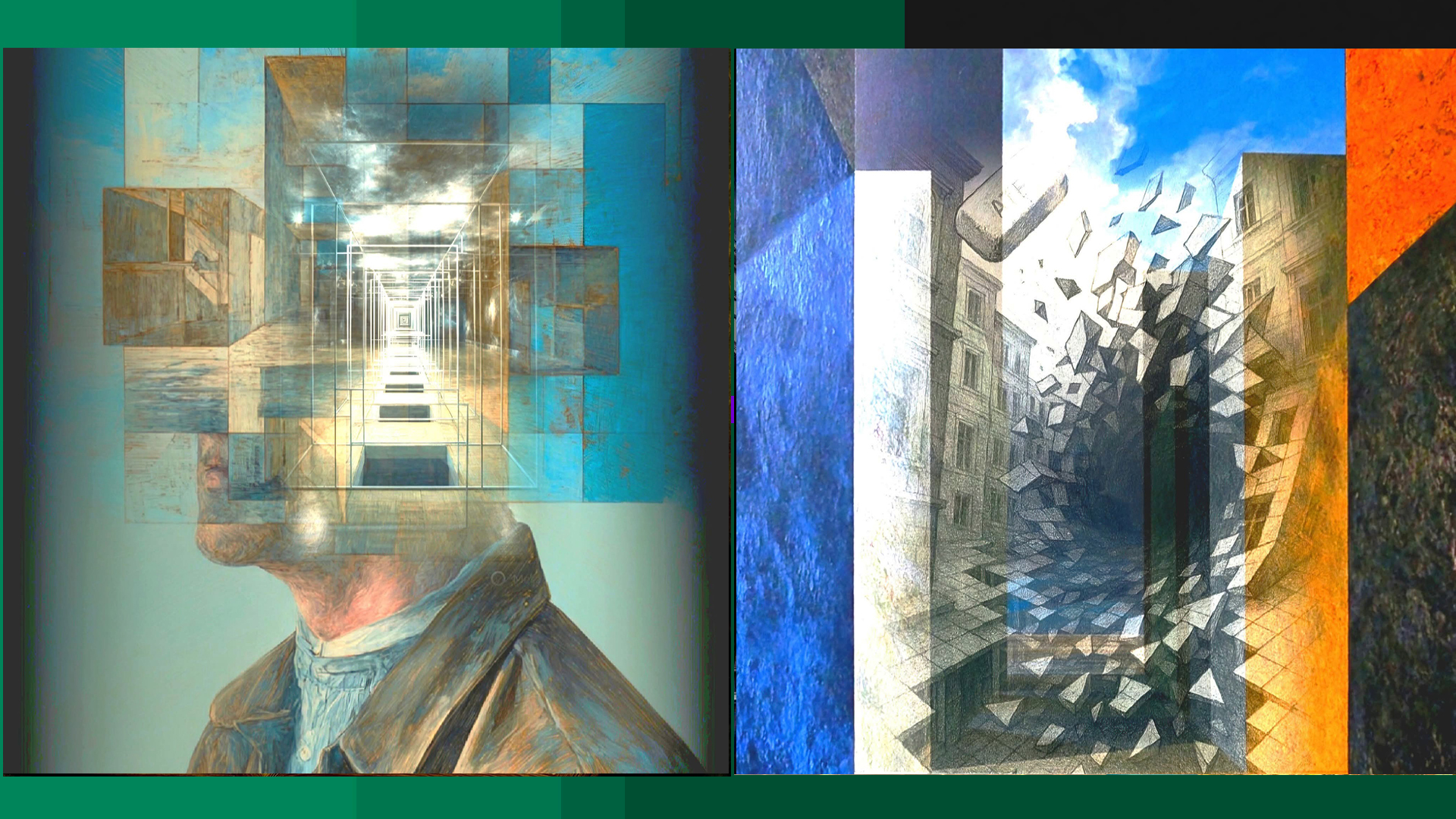
The reduction of space to surfaces enables a surrealistic vision; it allows access to the inner level of things, to the perception of their essence, marvellously concealed by the skin that envelops everything: Nature.
The architectural issues concerning the relationship with nature can be summarized in two distinct and opposing tendencies:
the first, a form of symbiosis between artistic forms and nature;
the second, an apparent refusal, and thus a lack of identification with it.
Worringer’s well‑known thesis interprets these two opposing artistic tendencies as expressions of different moments in humanity’s evolving attitude toward nature. Naturalistic art, he argues, arises from a sympathetic identification with the external world (Einfühlung), a harmonious tension that draws the subject toward organic forms. Abstraction, by contrast, emerges from an anti‑naturalistic impulse: a response to the anxiety provoked by the chaotic, unpredictable character of the sensible world.
In this framework, abstraction emerges as one of the two fundamental categories of artistic form, distinctive of the early Nordic civilizations, while the other category, characteristic of the classical Mediterranean world, is grounded in a mimetic identification with nature.
In the study of nature, outer qualities are deliberately suspended, creating space for the inner phenomena that pulse beneath the surface. What is purely visible is set aside so that the invisible may emerge as the true horizon of inquiry, a gesture akin to peeling away the skin and body of things, inviting their concealed resonances to speak.
Through abstraction, art uncovers a linguistic instrument that situates itself beyond science, philosophy, and religion, enabling a perspectival approach to the absolute value inscribed in cosmic law.
In this case as well, one might be dealing with genuinely exoteric visions, where the detachment from real space opens onto a condition of absolute perception, an experience in which, as Malevič suggests, the very point of reference dissolves.
Mondrian posits a fundamental tension between abstraction and the mimetic representation of the external world, yet simultaneously maintains that abstraction remains intrinsically grounded in the inner, essential structure of nature itself.
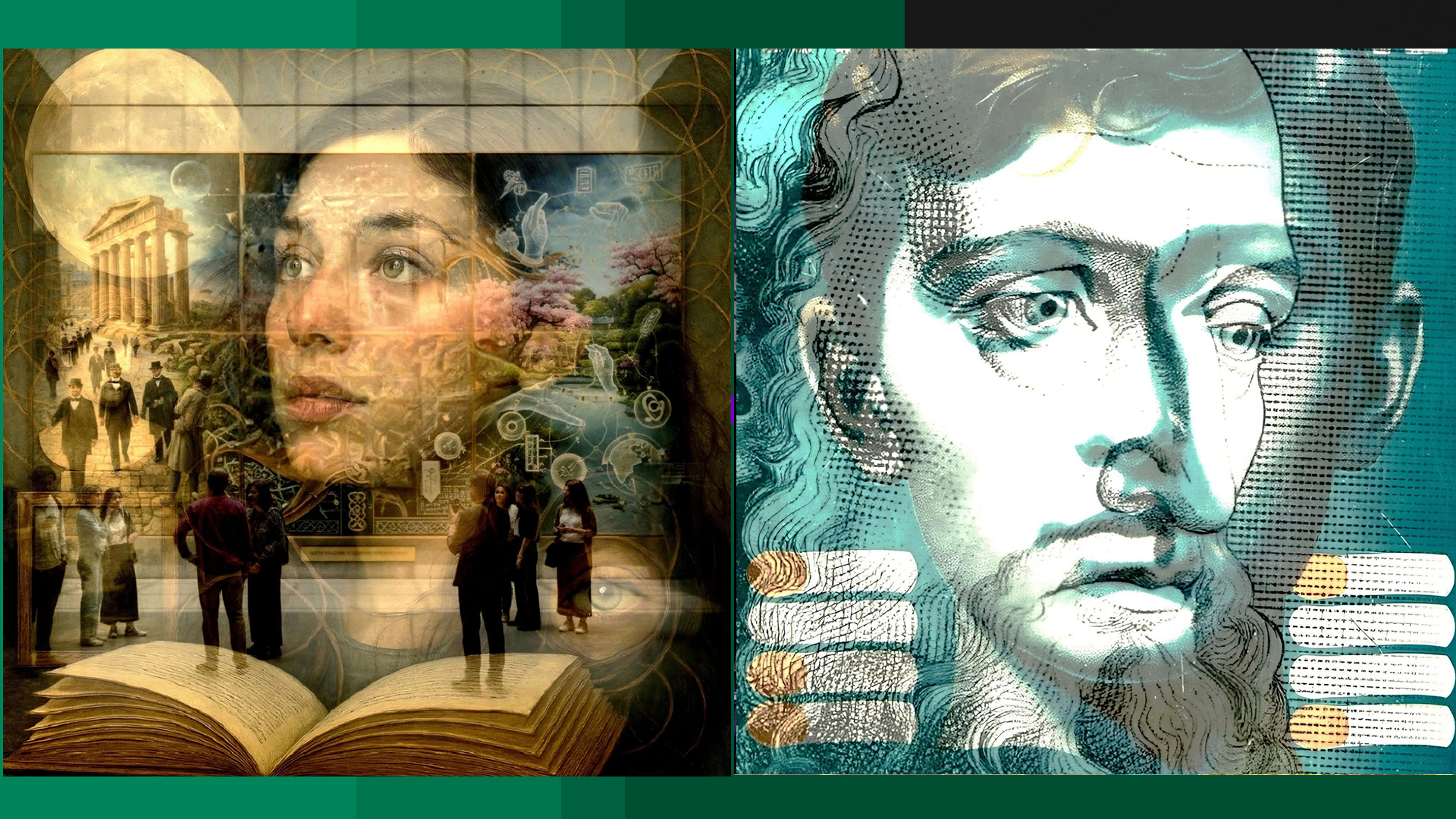
Realism, in cases such as these, is elevated to higher exponential values; it becomes a super‑realism characteristic of a culture that largely acknowledges the interconnections already expressed by the Symbolist art of the late nineteenth century, an art primarily oriented toward the appropriation of cognitive instruments capable of operating across the temporal span of artistic phenomena, and which, in its compositional grammars, unfolds those same linguistic dilations that serve as observatories of the soul.
The error, frequently introduced by art chroniclers, tends to expand into perspectival constructions whose points of view dissolve, quite literally, into an absolute void.
From "Design of New Words"
Super Realistic Abstraction by Filippo Lo Presti 1989
Welcome to this exploration of
Super Realistic Abstraction, a threshold where art, science, and philosophy converge. In 1989, Filippo Lo Presti’s Design of New Words traced the avant-garde’s dialogue with Einstein’s relativity, the fourth dimension of time, and the paradox of Futurism, embracing science while resisting its authority. Here, abstraction is not escape but intensification: a ritual of perception that dissolves language into pure resonance. Mondrian’s universality, Kandinsky’s cosmic vibration, Worringer’s anxiety, and the Symbolists’ interconnections all converge into a super-realism—where realism itself is magnified into exponential clarity. This is not merely theory; it is a vision, a call to perceive beyond the limits of language, science, and religion, toward absolute values inscribed in cosmic law. Join us as we step into this space of resonance, where abstraction becomes super-real, and perception itself becomes ritual.
Listen to
Words Beyond Reality, a Copilot Microsoft Podcast
As we leave the space of Super Realistic Abstraction, we carry with us a vision beyond language, beyond science, beyond the limits of imitation. Filippo Lo Presti’s Design of New Words reminds us that abstraction is not absence but intensification, a magnification of reality into its cosmic resonance. Here, art becomes a vessel of clarity, philosophy becomes ritual, and perception itself becomes a threshold. May this invocation guide you to see the world not as fragments, but as interconnected values inscribed in the law of the universe. Until our next passage together, remain attuned to the resonance of the super-real.